Product Description
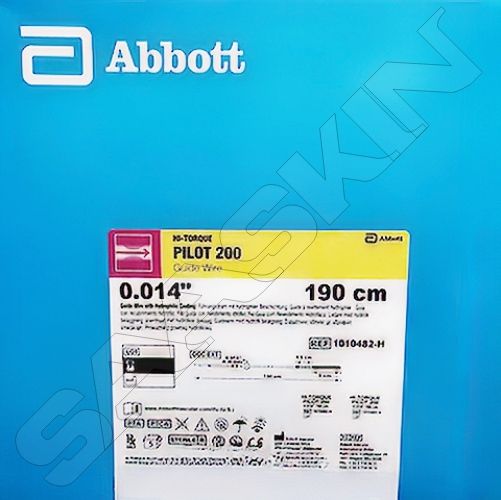
| Brand | Abbott |
| Tip Radiopacity | 3 cm |
| Tip Shape | Straight, J Shaped |
| CAT No | 1010482-H, 1010482-HJ |
| Wire Length | 190 cm |
HI-TORQUE Guide Wires are intended to facilitate the placement of balloon dilatation catheters during percutaneous transluminal coronary angioplasty (PTCA) and percutaneous transluminal angioplasty (PTA).
Advanced Coating for Exceptional ManeuverabilityThe full-length hydrophilic coating on the HI-TORQUE PILOT 200 Guide Wire enhances its ability to navigate through tortuous vessels, offering a smooth approach even in challenging cases. The polymer jacketed tip reduces friction, while the radiopaque markers improve visibility, helping clinicians achieve high precision during complex interventions.
Reliable Performance in Difficult LesionsDesigned for chronic total occlusions and difficult-to-cross lesions, the moderate tip load and excellent torque response of the guide wire ensure adequate support alongside flexibility. This makes it a preferred tool in interventional cardiology procedures, as it can facilitate the successful crossing of complex, tortuous, or occluded vessels.
Safe and Convenient Single-use DesignEach wire is provided in a sterile, individually packed, peel-open pouch for easy handling and infection control. With ultra-lightweight, manual operation and silent performance, clinicians benefit from streamlined workflow and safe usage. The single-use feature ensures reliability, and a 3-year shelf life supports long-term inventory management.
FAQ's of Abbott HI-TORQUE PILOT 200 Guide Wires:
Q: How should the Abbott HI-TORQUE PILOT 200 Guide Wire be prepared for use during interventional cardiology procedures?
A: The guide wire is provided sterile and ready to use in a peel-open pouch. Simply open the packaging aseptically just before the procedure and inspect for integrity, then insert per standard protocol in combination with compatible coronary microcatheters or devices.
Q: What benefits does the full-length hydrophilic coating offer during lesion crossing?
A: The advanced hydrophilic coating significantly reduces friction, facilitating smoother navigation through tortuous or occluded vessels. It helps the wire maneuver with ease, especially in chronic total occlusions and complex coronary lesions, enhancing procedural efficiency.
Q: When is the HI-TORQUE PILOT 200 Guide Wire typically used in cardiological interventions?
A: This guide wire is intended for use in coronary peripheral interventions, particularly during procedures involving chronic total occlusions (CTO) or when crossing challenging, complex lesions requiring precise support and navigation.
Q: Where should the guide wire be stored to maintain its integrity and shelf life?
A: Store the guide wire in a cool, dry place away from direct sunlight. Keeping the packaging unopened preserves sterility and ensures a shelf life of up to 3 years.
Q: What process ensures accurate positioning under fluoroscopy?
A: The distal segment of the wire contains radiopaque markers, which provide high visibility and accuracy for tip positioning under fluoroscopy, aiding precise lesion crossing during interventions.
Q: Can the HI-TORQUE PILOT 200 Guide Wire be reused or resterilized for multiple procedures?
A: No, the guide wire is designed for single-use only to ensure patient safety and compliance with infection control protocols. It should be disposed of after each procedure.
Q: What are the main advantages of the wire's design features for clinicians?
A: Clinicians benefit from a tapered, kink-resistant tip for improved penetration, ultra-lightweight handling, silent operation, and excellent torque response, all contributing to reliable navigation, accurate lesion crossing, and procedural success.












 Accepts only Export inquiries



 Send Inquiry