Product Description
| Brand | Metrohm |
| Model | OMNIS |
| Capacity | 5-50 ml Buret Volume |
| CAT No | 210020010, 210020110 |
| Application | Titration |
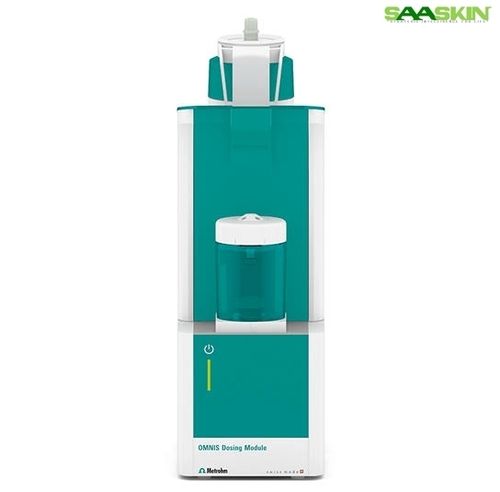
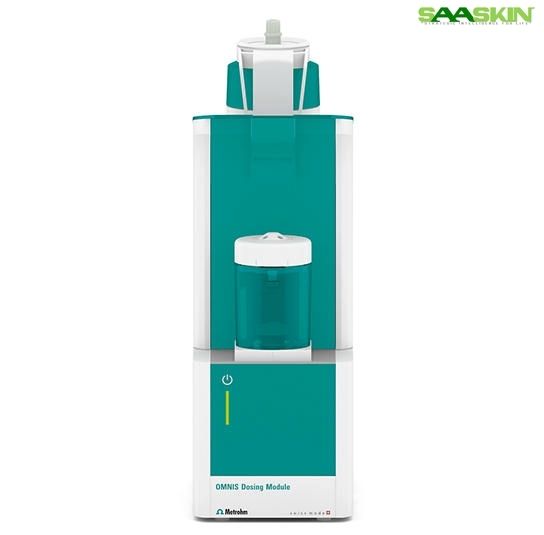
Titration module for connection to an OMNIS Titrator for extending the system to include an additional buret for titration/dosing and up to two measuring modules (analog or digital). Can be supplemented with one magnetic stirrer or rod stirrer for use as separate titration stand. Freely selectable cylinder unit with 5, 10, 20 or 50 mL. Titration module with magnetic stirrer for connection to an OMNIS Titrator for extending the system to include an additional titration stand, a buret for titration/dosing and up to two measuring modules (analog or digital). Freely selectable cylinder unit with 5, 10, 20 or 50 mL.
Versatility and Precision in TitrationSupporting a broad range of titration techniques-potentiometric, Karl Fischer, redox, precipitation, and more-the OMNIS Module ensures unparalleled flexibility for diverse laboratory needs. It features a digital burette drive with 10,000-step motorized operation for exceptional dosing accuracy, integrating seamlessly with pH, ISE, argentometric, and redox electrodes.
Smart Data Handling and ComplianceThe OMNIS Titration Module offers both internal and external data storage via USB or Ethernet, enabling secure and efficient data management. Designed with GLP/GMP compliance in mind, laboratories can confidently use this system for regulated environments, with reliable traceability and safety assurances.
Optimized for Laboratory EnvironmentsConstructed from chemical-resistant polymers and aluminum, this compact unit (340 x 250 x 280 mm) is built for durability in demanding lab workspaces. With integrated temperature sensors, high-power stirring, and automatic safety protections, the OMNIS system supports reliable operations in temperatures between 10-40 C and up to 80% humidity.
FAQ's of Metrohm OMNIS Titration Module:
Q: How do I operate the Metrohm OMNIS Titration Module?
A: The OMNIS Titration Module operates via PC control using OMNIS software, which is accessible through a touch display or mouse and keyboard. This user-friendly interface streamlines method creation, monitoring, and data management for all supported titration techniques.
Q: What types of titrations and electrodes is this module compatible with?
A: The OMNIS Titration Module supports potentiometric, Karl Fischer, redox, precipitation, complexometric, and non-aqueous titration methods. It is compatible with pH, ion-selective (ISE), argentometric, and redox electrodes, making it suitable for a vast range of analytical applications.
Q: When should I use the high-power multi-stirrer option?
A: The high-power multi-stirrer is ideal when running multiple titrations in parallel or processing viscous samples, ensuring homogeneous mixing and accurate results. This option increases sample throughput and consistency during simultaneous analyses.
Q: Where can the data be stored and how is it managed?
A: Data from the OMNIS system can be stored internally or exported externally via USB or through Ethernet network connections. This allows for flexible data handling and integration into laboratory information management systems, ensuring secure and compliant data archiving.
Q: What safety features are integrated into the OMNIS Titration Module?
A: Safety is prioritized with cylinder protection, overfill protection, and integrated pressure compensation. These safeguard users and maintain consistent, reliable operation even during demanding titration processes.
Q: How does the system support regulatory compliance?
A: The OMNIS Titration Module is fully compliant with GLP/GMP requirements, providing audit trails, automated documentation, and secure data handling to meet quality and regulatory mandates in laboratories, especially in pharmaceutical and food industries.
Q: What are the main benefits for laboratories using this system?
A: Labs benefit from the module's modular expandability (supporting up to 4 units), advanced safety protocols, automated high-precision titration, user-friendly operation, and robust data management-all contributing to greater productivity, reliability, and compliance in analytical workflows.










 Accepts only Export inquiries




 Send Inquiry