Product Description
Brand Agilent Technologies
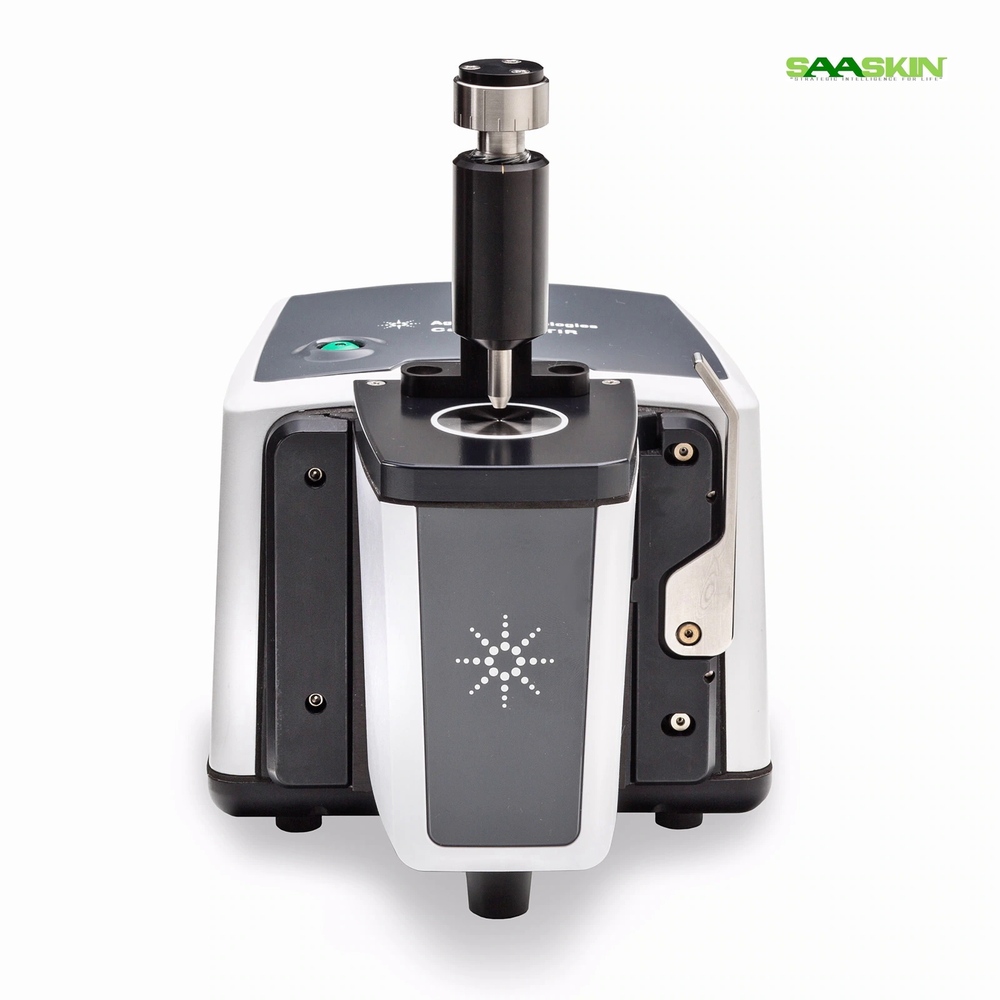
Model Cary 630
Capacity ZnSe 5,100 to 600 cm-1
CAT No Cary 630
Application Spectroscopy
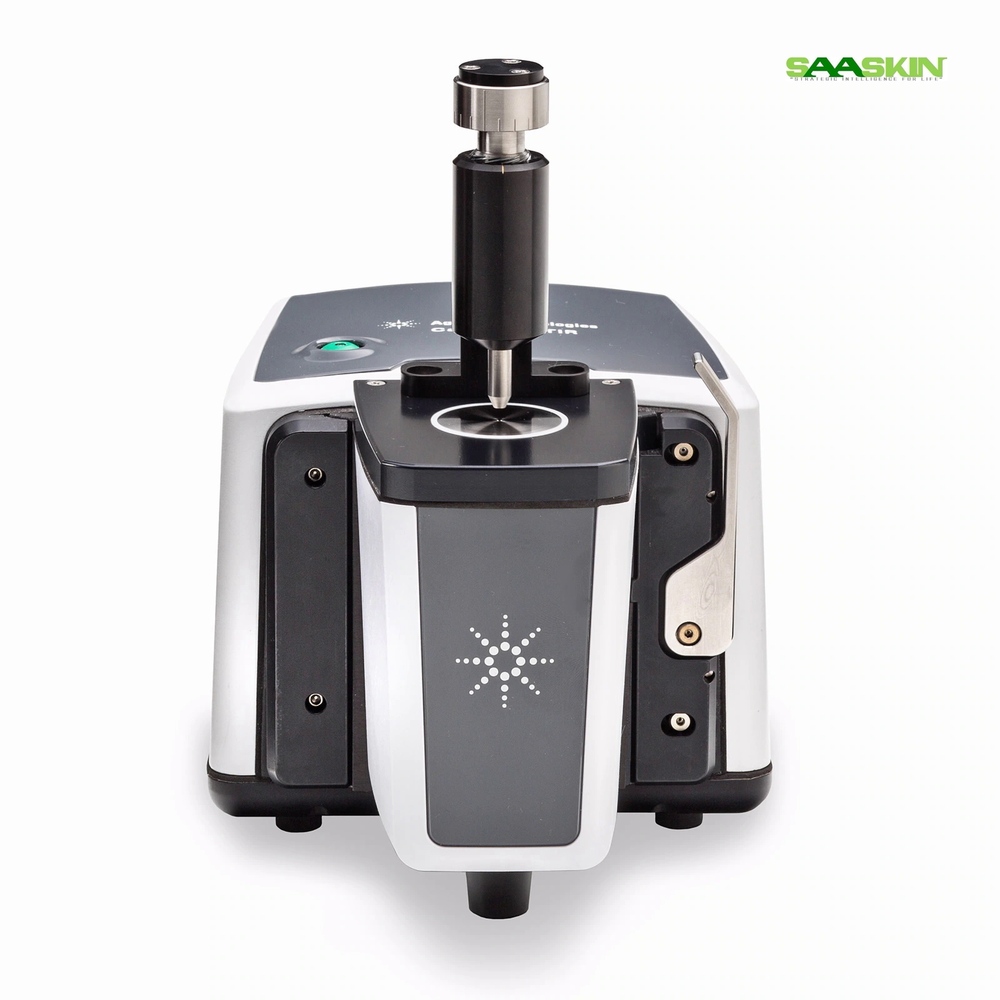
The Agilent Cary 630 FTIR spectrometer is a flexible benchtop FTIR instrument offering high performance and extraordinary ease-of-use in an ultra-compact design. It is engineered with the user in focus and provides simple, intuitive workflows to deliver meaningful answers in routine FTIR spectrometer analysis and cutting-edge research.
Advanced Modular Spectroscopy Made SimpleThe Cary 630 FTIR employs an innovative modular system, allowing users to easily swap between sampling techniques like ATR, transmission, and diffuse reflectance using plug-and-play modules. Its semi-automatic, PC-controlled interface is intuitive, while robust hardware ensures consistent results in both laboratory and field applications. This system adapts to a broad range of sample types and workflows, making it a smart choice for demanding molecular analysis.
Precision and Flexibility for Routine AnalysisWith a spectral resolution superior to 2 cm1 and a signal-to-noise ratio exceeding 6,000:1, the Cary 630 FTIR delivers accurate, reproducible results. Accessories such as deuterated triglycine sulfate (DTGS) and MCT detectors expand its measurement range, while intuitive software integration allows for seamless operation and data handling. The compact footprint and rugged build add to its flexible utility.
FAQ's of Agilent Technologies Cary 630 FTIR Spectrometer:
Q: How does the modular design of the Cary 630 FTIR Spectrometer enhance its usability?
A: The Cary 630 FTIR features a modular architecture, allowing users to quickly switch between sampling modules-such as ATR, transmission, and reflectance-without tools. This flexibility supports a variety of sample types and analytical workflows, making the instrument highly adaptable for different routine and advanced molecular analysis tasks.
Q: What is the measurement range and spectral resolution of the instrument?
A: The Cary 630 FTIR offers a standard mid-IR measurement range from 4,000 to 400 cm1, which can be expanded up to 8,300-350 cm1 with optional detectors. It provides excellent spectral resolution, better than 2 cm1, ensuring detailed and accurate spectral data.
Q: When might I choose the optional MCT detector over the standard DTGS?
A: The optional MCT (mercury cadmium telluride) detector is ideal when higher sensitivity or an extended measurement range is required-such as in applications demanding rapid scanning or the analysis of trace amounts. The standard DTGS detector is suitable for most routine laboratory applications.
Q: Where can the spectrometer be used, and what are typical applications?
A: The Cary 630 FTIR is designed for both laboratory and field use, owing to its compact size and rugged build. It is commonly utilized in chemical, pharmaceutical, environmental, and material analysis, enabling identification and quantification of molecular compounds.
Q: What is the process for switching between sampling modes or modules?
A: Changing between sampling modes is straightforward due to the spectrometer's plug-and-play module system. Modules can be swapped in or out without the need for special tools or scheduled maintenance, allowing rapid reconfiguration for different analytical methods or sample types.
Q: How does the Cary 630 FTIR benefit laboratories in terms of maintenance and operation?
A: The instrument requires no scheduled maintenance and allows tool-free accessory replacement, reducing downtime and operating costs. Its semi-automatic, PC-controlled functions, coupled with user-friendly software, further streamline routine workflows and training requirements.












 Accepts only Export inquiries



 Send Inquiry