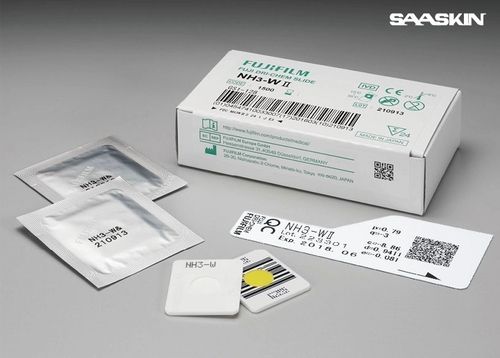
Product Description
| Brand | FUJIFILM |
| Sample Type | Whole Blood, Plasma |
| Pack Size | 24T, 24T |
| CAT No | NH3-WII, NH3-PII |
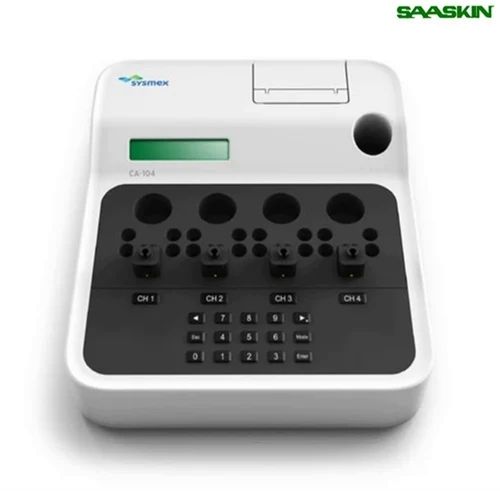
A blood ammonia test analyzer that can examine a whole blood sample and deliver the test results within two minutes
Rapid and Precise Ammonia MeasurementThe FUJIFILM DRI-CHEM SLIDE offers a fast and highly accurate solution for ammonia determination in whole blood and plasma. Utilizing the advanced GLDH-Urease enzymatic reaction, these slides ensure reliable results in just a few minutes, aiding clinical decisions in critical and routine diagnostic scenarios.
Convenient Automated TestingOptimized for use with Fujifilm DRI-CHEM analyzers, the slides simplify the workflow by automating the diagnostic process. No sample pre-treatment or manual reagent addition is required, minimizing the risk of error and increasing efficiency in laboratories and point-of-care settings.
Broad Application and Reliable StorageSuitable for both human and veterinary applications, the reagent slides come individually wrapped, ensuring stability and protection from moisture. Proper storage between 2-8C and use before the labeled expiry date guarantees consistent performance and safety for end users.
FAQ's of FUJIFILM DRI-CHEM SLIDE NH3-WII (for whole blood) and NH3-PII (for plasma):
Q: How is the FUJIFILM DRI-CHEM SLIDE NH3-WII and NH3-PII used in ammonia measurement?
A: These slides are placed into a compatible Fujifilm DRI-CHEM analyzer, where they automatically perform a quantitative ammonia test on whole blood (NH3-WII) or plasma (NH3-PII) samples. No manual reagent preparation or pre-treatment is needed.
Q: What types of samples can be tested with NH3-WII and NH3-PII slides?
A: NH3-WII slides are specifically for whole blood samples, while NH3-PII slides are suitable for plasma. Both are intended for use in clinical laboratory settings by trained professionals.
Q: When are the results available after starting the ammonia test?
A: Results are typically available within approximately 4 to 7 minutes, enabling effective and rapid clinical decision-making.
Q: Where should the slides be stored to maintain their quality?
A: Slides should be stored refrigerated at 2-8C, protected from moisture, and kept in sealed packaging. Avoid freezing and direct exposure to sunlight for optimal longevity and performance.
Q: What is the test principle behind these ammonia reagent slides?
A: The slides utilize a GLDH-Urease enzymatic reaction, which quantitatively determines ammonia concentration in blood or plasma with high accuracy.
Q: Who is recommended to use these slides and what is their regulatory status?
A: These slides are intended for clinical laboratory professionals and trained operators. They are CE marked (subject to regional availability) and classified as IVD (In Vitro Diagnostic Use Only).
Q: What benefits do these slides offer for laboratory and point-of-care testing?
A: Key benefits include rapid, high-precision results, broad measurement range, minimal sample volume requirements, and elimination of pre-treatment steps, making them highly efficient for both human and veterinary diagnostics.










 Accepts only Export inquiries



 Send Inquiry