Product Description
Brand Eppendorf
Model BioBLU
Capacity 648 Samples
CAT No. 7700200007
Application Bioprocess
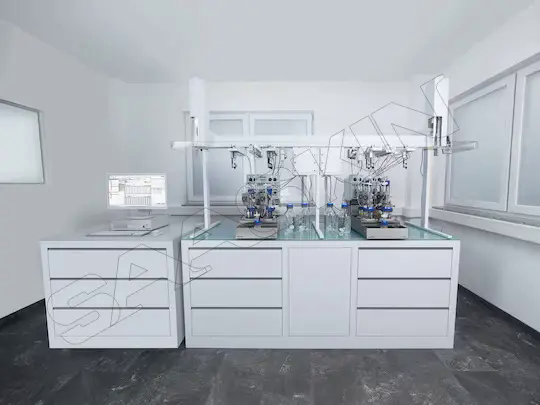
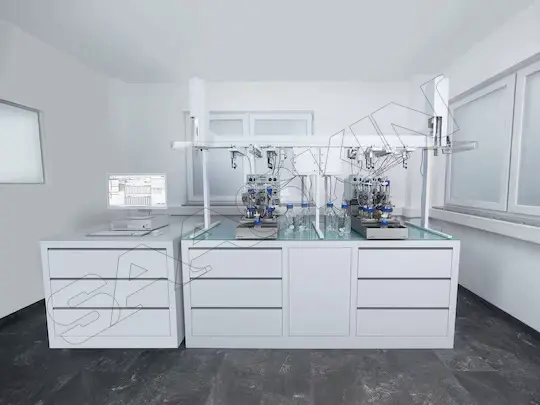
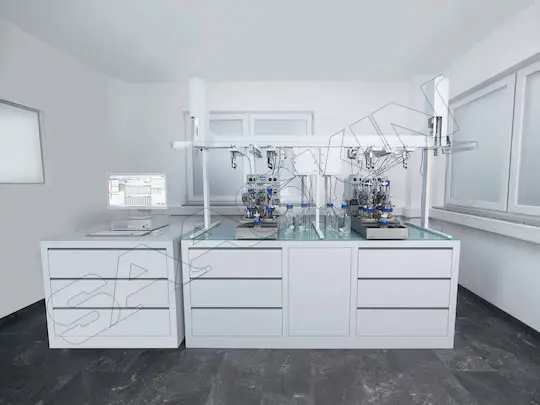
The Bioprocess Autosampler takes samples from multiple bioreactors and stores them tempered for later analysis. It is compatible with glass and single-use bioreactors operated with a DASboxMini Bioreactor System, DASGIPParallel Bioreactor System, SciVariotwin or BioFlo320 bioreactor control system.
Efficient Automated Sampling for Bioprocess ResearchEngineered to streamline workflows in microbiology, bioprocessing, and biotechnology, the Eppendorf Bioprocess Autosampler enables unattended, software-controlled sampling. Its adaptable design supports various sampling schedules and vessel formats, making it suitable for multi-platform laboratories and research institutions.
Preserving Sample Integrity and TraceabilityThis autosampler protects samples using an actively cooled sample rack and a HEPA-filtered environment. Integrated piercing needles allow for contamination-free sampling, while barcode labeling ensures precise data tracking from collection through analysis.
Compliant and Versatile IntegrationCompatible with diverse bioreactor models and supporting GLP/GMP requirements, the Eppendorf Autosampler suits regulated environments. Its connectivity options, vessel adapters, and autoclavable components allow seamless installation and interoperable data exchange for advanced laboratory automation.
FAQs of Eppendorf Bioprocess Autosampler:
Q: How does the Eppendorf Bioprocess Autosampler maintain sample integrity during collection and storage?
A: The autosampler preserves sample quality using a cooled rack (440C), a HEPA-filtered enclosure, and automated sample handling with integrated piercing needles. This setup minimizes contamination and ensures that samples remain stable until analysis.
Q: What types of sampling modes are available, and how are they controlled?
A: The instrument supports time-based, volume-based, event-triggered, and externally triggered sampling modes. All are managed via user-friendly, software-controlled settings, offering flexibility to match various experimental needs.
Q: When is it beneficial to use automated cleaning and flushing routines?
A: Automated cleaning and flushing routines should be used after each sampling session or when changing media or vessel types. This ensures the autosampler lines and components remain uncontaminated, supporting accurate and repeatable sampling processes.
Q: Where can the Eppendorf Bioprocess Autosampler be integrated in laboratory workflows?
A: Due to its compatibility with many bioreactor brands and vessel sizes (60 mL5 L), the autosampler fits seamlessly into most research laboratories, industrial bioprocessing units, and GMP-regulated environments focused on advanced cell culture monitoring.
Q: What is the maximum number of samples the autosampler can process per session?
A: The system can store and process up to 96 samples in one session, allowing for high-throughput sampling during extended bioprocess runs or multi-parallel fermentation experiments.
Q: How does barcode labeling benefit sample tracking and data handling?
A: Barcode labeling ensures each collected sample is uniquely identified and tracked throughout processing and analysis, reducing the risk of mix-ups and streamlining data integration with DASware software via USB or Ethernet connectivity.
Q: What advantages does the optional autoclavable sampling line provide?
A: Autoclavable sampling lines support sterile operation, simplifying compliance with GLP/GMP regulations and reducing the risk of contamination during repeated or long-term use, especially in regulated research or manufacturing settings.











 Accepts only Export inquiries



 Send Inquiry