Product Description
| Brand |
Thermo Fisher Scientific |
| Product Type |
Protein Assay Kit |
| Pack Size |
1 KIt |
| CAT No |
Q33210 |
| Application |
Molecular Biology |
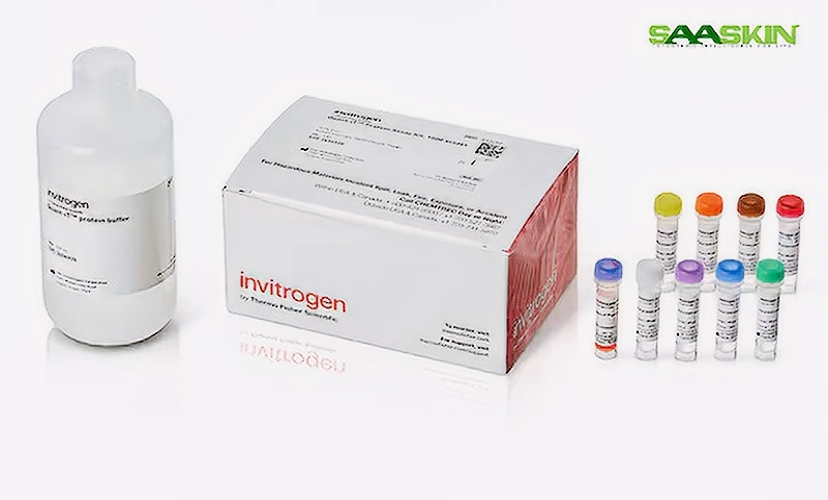
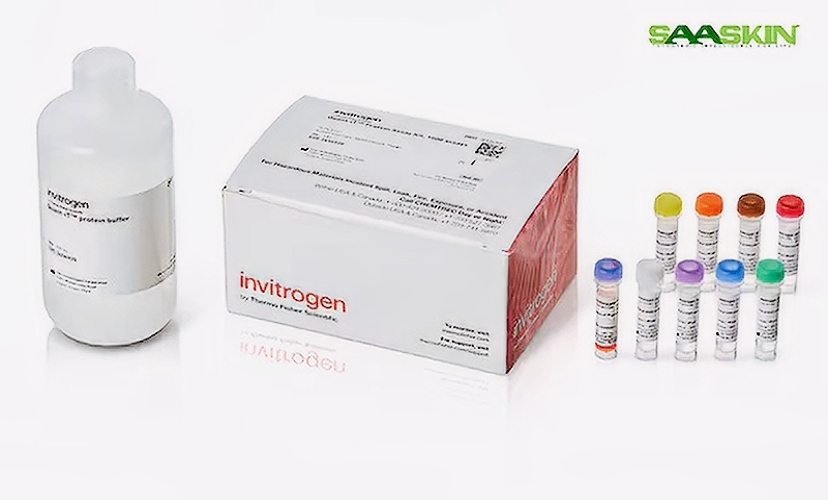
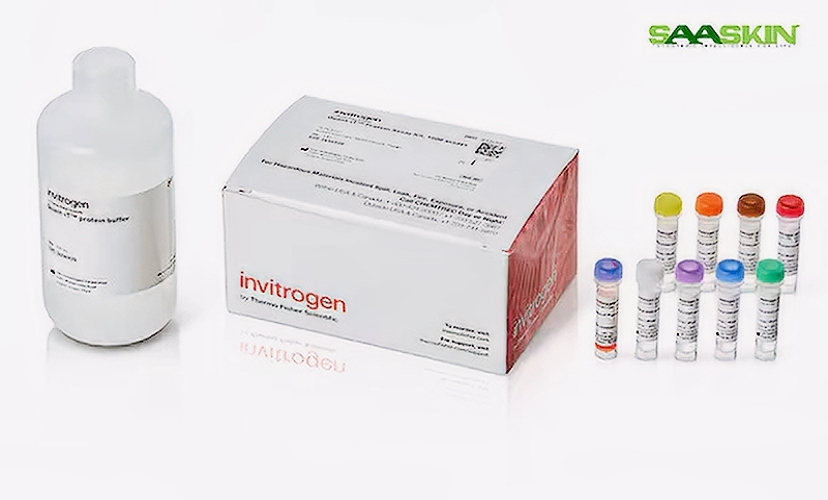
TheA Quant-iT Protein Assay KitA makes protein quantitation easy and accurate. The kit provides concentrated assay reagent, dilution buffer, and pre-diluted BSA standards. Simply dilute the reagent, load it into the wells of a microplate, add 1-20 I14L of sample, mix, then measure the fluorescence. The assay is highly selective for protein and exhibits very little protein-to-protein variation. The assay is performed at room temperature, and the signal is stable for 3 hours. Common contaminants, such as salts, solvents, or DNAabut not detergentsaare well tolerated in the assay. Quant-iT DNA Assay Kits (Q33120, Q33130) and a Quant-iT RNA Assay Kit (Q33140) are also available.
Fast and Reliable Protein QuantificationThe Quant-iT Protein Assay Kit offers a sensitive, fluorescence-based method for quantifying protein concentrations in just 15 minutes. It is compatible with a variety of sample types, including purified proteins, cell lysates, and samples containing detergents, making it ideal for diverse laboratory workflows. With easy-to-follow protocols for both microplate and microtube formats, you can process a few to up to 1000 assays per kit, depending on the size.
Broad Dynamic Range and Superior SensitivityThis kit accurately detects protein amounts as low as 12.5 ng/mL and as high as 5 g/mL (BSA equivalent), ensuring robust coverage for your applications. Supplied BSA protein standard enables precise calibration, while the proprietary reagent mix minimizes interference and enhances assay specificity. The kit's fluorescent readout offers high sensitivity and quantifiable results every time.
Flexible Protocols to Fit Any LabWhether you're using a 96-well plate or processing small volumes in microtubes, the Quant-iT Protein Assay Kit adapts easily. Compatible with standard microplate readers or fluorometers, its portability and quick workflow suits both high-throughput and small-scale labs. Simply follow the included manual protocol, and take advantage of the compact design for easy storage and handling.
FAQ's of Thermo Fisher Scientific Invitrogen Quant-iT Protein Assay Kit:
Q: How does the Invitrogen Quant-iT Protein Assay Kit quantify protein concentration?
A: The kit uses a sensitive fluorescence-based assay to quantify protein levels. When the provided reagent binds to protein, it generates a fluorescent signal (excitation ~470 nm, emission ~570 nm) measured using a microplate reader or fluorometer. The signal intensity correlates with protein concentration.
Q: What types of protein samples is this assay compatible with?
A: This assay works with purified protein solutions, cell lysates, and samples that contain detergents. Its proprietary mix offers broad compatibility, making it suitable for a wide range of laboratory protein measurements.
Q: When should I use a microplate format versus a microtube protocol with this kit?
A: If you have many samples to process, use the 96-well plate format for higher throughput. For smaller sample numbers or volumes, the microtube protocol is ideal. Both methods are included in the kit instructions for flexibility.
Q: What equipment is required to perform the Quant-iT Protein Assay?
A: You'll need a microplate reader or fluorometer capable of excitation at approximately 470 nm and emission detection at around 570 nm. No specialized wall-mounted equipment is necessary.
Q: How many assays can I perform with one kit, and how do I select the right size?
A: The number of assays (up to 1000 per kit) depends on your chosen format and the kit size (Q33211, Q33212, or Q33213). Select a kit based on your anticipated sample volume and frequency of use.
Q: Where should the kit be stored, and how long is it stable?
A: For optimal performance, store the kit at 2-8C in the dark. When stored as directed, the kit's shelf life is 6 months.
Q: What are the major benefits of using the Quant-iT Protein Assay Kit in the lab?
A: The kit stands out for its high sensitivity (down to 12.5 ng/mL), fast assay time (under 15 minutes), broad dynamic range, and compatibility with various sample types. These features offer both convenience and accuracy for laboratory protein quantification.












 Accepts only Export inquiries



 Send Inquiry