Product Description
Brand Shimadzu
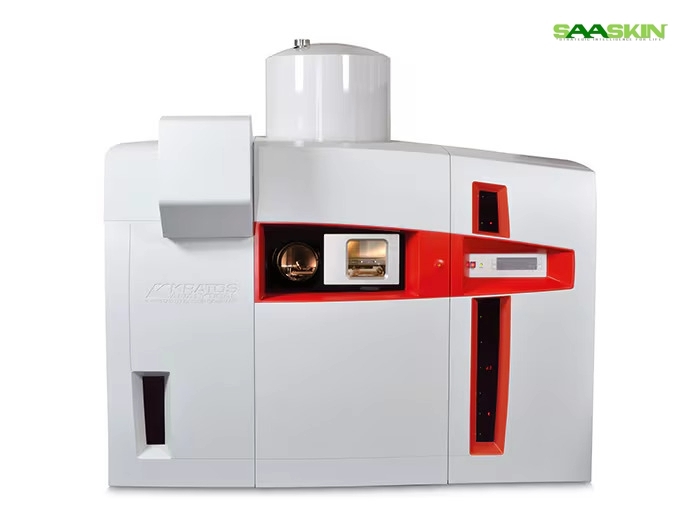
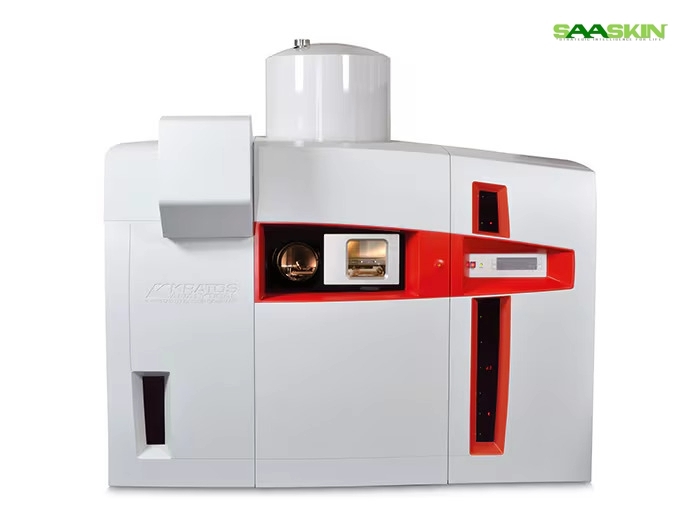
Model AXIS Nova
Capacity 10 nm
CAT No AXIS Nova
Application Spectroscopy
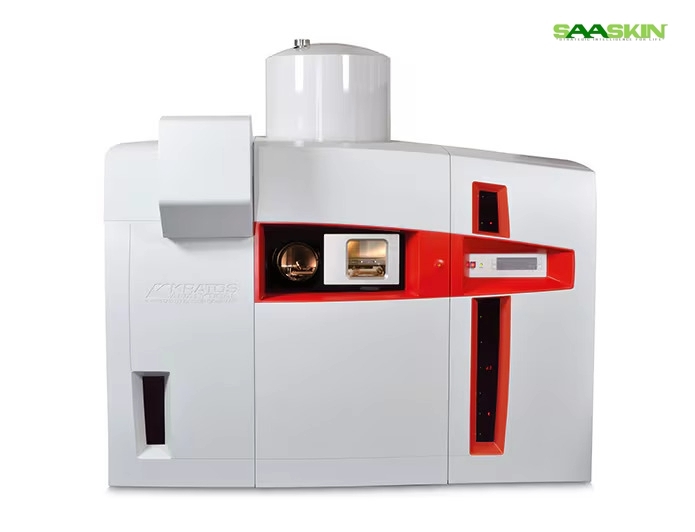
X-ray photoelectron spectroscopy (XPS), also known as electron spectroscopy for chemical analysis (ESCA), is a mature and widely used surface analysis technique for materials characterisation. XPS provides quantitative elemental and chemical state information from the upper most 10 nm of material. The The AXIS Nova photoelectron spectrometer can collect X-ray photoelectron spectra and images from any material that is stable under the ultra-high vacuum conditions required for the technique.
Precision Surface Chemical AnalysisThe AXIS Nova offers highly accurate surface chemical analysis by utilizing a high-resolution, monochromated Al K X-ray source and state-of-the-art electron energy analyzer. Users can quantitatively determine elemental composition as well as chemical and electronic states on surfaces down to atomic percentages, supporting materials science, semiconductor, and thin-film research needs.
Advanced Imaging and Mapping CapabilitiesParallel imaging delivers spatial resolution below 3 m, enabling detailed energy and chemical state mapping across samples as large as 110 mm in diameter. Equipped with motorized X-Y-Z-- stage movement and an array of sample holders, the instrument supports multi-sample analysis, imaging, and depth profiling with exceptional efficiency.
Easy, Automated Operation and Data ManagementThe AXIS Nova's automated load-lock system, sample carousel, and Vision software suite streamline sample introduction and data acquisition. Digital outputs are compatible with VAMAS and ASCII formats, facilitating easy data sharing and analysis. Safety and international compliance ensure reliable operation in research and industry laboratories.
FAQ's of Shimadzu Kratos AXIS Nova Imaging X-Ray Photoelectron Spectrometer:
Q: How does the AXIS Nova achieve ultra-high spatial resolution for imaging?
A: The AXIS Nova uses a parallel imaging system with a monochromated Al K X-ray source and precision electron energy analyzer, achieving spatial resolutions better than 3 m, ideal for detailed surface mapping of chemical and electronic states.
Q: What is the process for introducing and analyzing samples?
A: Samples are introduced using an automated load-lock system with a carousel, minimizing vacuum loss. The fully motorized sample stage allows X-Y-Z-- movement, ensuring accurate positioning during imaging and analysis. The process is managed using the Vision software suite for streamlined operation.
Q: When is depth profiling necessary and how is it performed with this instrument?
A: Depth profiling is used when information about elemental distribution below the surface is required. The AXIS Nova utilizes a monatomic or cluster Ar+ ion source to gently sputter material, enabling precise layer-by-layer analysis of composition and chemical states.
Q: Where can the AXIS Nova be used and what applications does it support?
A: This spectrometer is suitable for research institutions, industrial laboratories, and manufacturing for surface analysis, failure investigation, and materials characterization. It supports elemental composition determination, chemical state mapping, and thin film analysis.
Q: What benefits does the Vision software suite provide for controlling the AXIS Nova?
A: Vision software enables automated data acquisition, instrument control, and real-time chemical mapping. It also ensures compatibility with VAMAS and ASCII formats for straightforward data processing, sharing, and reporting.
Q: How does the system ensure accuracy and sensitivity in measurements?
A: The monochromated X-ray source and advanced energy analyzer provide a spectral resolution of 0.48 eV FWHM, and the detection system achieves sensitivities of 0.1 atomic percent, delivering high-accuracy results even for trace measurements.
Q: What safety features and compliance does the AXIS Nova have?
A: The AXIS Nova complies with CE marking and international safety norms, featuring a closed stainless steel vacuum chamber, integrated water-cooling for the X-ray source, and fully automated sample handling to ensure operator safety during routine use.










 Accepts only Export inquiries



 Send Inquiry