Product Description
Brand Bruker
Model Alpha II
Capacity Diode laser
CAT No Alpha II
Application Spectroscopy
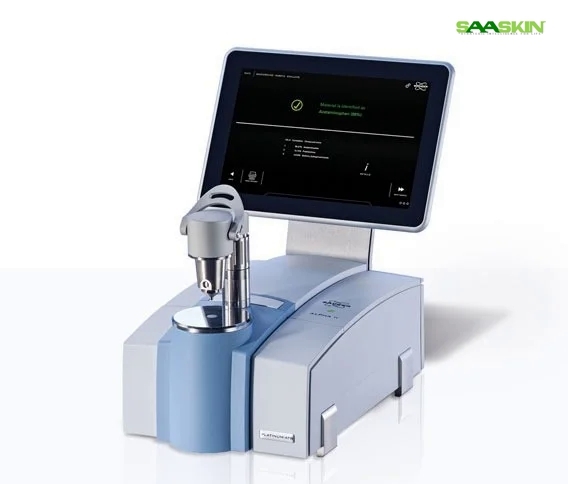
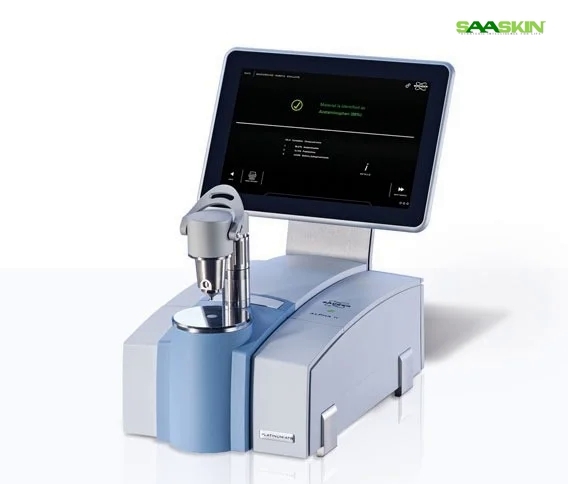
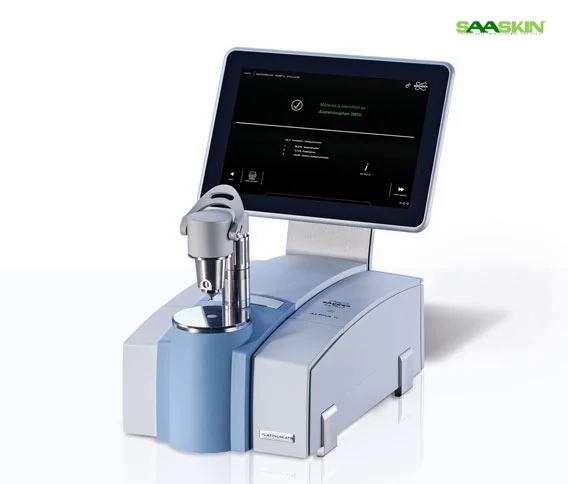
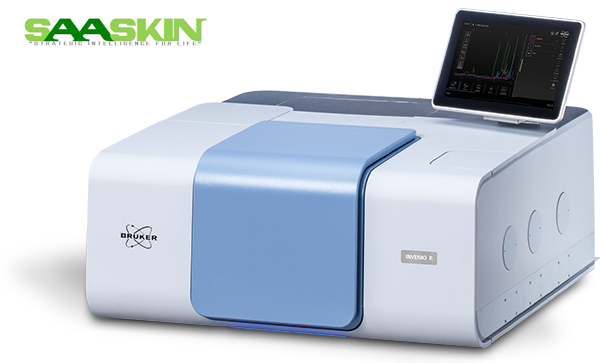
The ALPHA II is a compact FT-IR spectrometer with a footprint the size of a laptop. It is used for chemical analysis and enables you to do quality control, quantifications and verification of raw materials.
Ultra-Compact and Versatile DesignThe ALPHA II's small footprint (22 x 29 x 16 cm) and lightweight build (approx. 7 kg) make it ideal for crowded laboratories and mobile use. Equipped with QuickLock sample modules and a corrosion-resistant aluminum body, it adapts effortlessly to different analytical tasks while ensuring durability and easy maintenance.
Superior Performance and FlexibilityOffering spectral resolution better than 2 cm1 as standard (with options down to 0.5 cm1), the spectrometer achieves high-precision results. Its advanced optical system and broad spectral range (4000-400 cm1) enable comprehensive identification and characterization of organic and inorganic compounds using various sample types.
Seamless Data Handling and Software IntegrationThe ALPHA II features USB and Ethernet outputs, paired with the OPUS software suite for instrument control and thorough analysis. The intuitive digital touch screen interface ensures ease-of-use. Compatible with Windows 10 and higher, it integrates smoothly into evolving laboratory informatics workflows.
FAQ's of Bruker ALPHA II Compact FT-IR Spectrometer:
Q: How do I change the sample module on the Bruker ALPHA II FT-IR Spectrometer?
A: The ALPHA II uses QuickLock sample modules, enabling rapid switching between ATR, transmission, diffuse reflectance, and other sampling options without special tools. This makes it simple to adapt the instrument to solids, liquids, powders, or films.
Q: What types of samples can be analyzed with the Bruker ALPHA II?
A: With interchangeable sampling modules, the ALPHA II accommodates solids, liquids, powders, and films. Modules like Platinum ATR or transmission cells support a wide range of applications in qualitative and quantitative analysis.
Q: When is it beneficial to use the optional MCT detector instead of the standard DLaTGS?
A: The optional MCT detector is recommended for applications requiring faster or more sensitive measurements, such as trace analysis or extremely rapid scan rates. The standard DLaTGS detector is sufficient for most routine laboratory work.
Q: Where can the ALPHA II FT-IR Spectrometer be installed in a laboratory?
A: Thanks to its compact and lightweight design, the ALPHA II can be placed on any standard benchtop. Its robust construction and ambient operating range (15-35 C, <80% humidity) allow flexible positioning even in space-constrained labs.
Q: What benefits does the included OPUS software offer?
A: The OPUS software suite simplifies instrument control, data acquisition, and spectral analysis. Users benefit from an intuitive interface, comprehensive data processing tools, and compatibility with modern Windows operating systems.
Q: How is the Bruker ALPHA II maintained for long-term reliability?
A: The instrument is designed with minimal maintenance requirements, using a protective aluminum body and corrosion-resistant materials. Regular checks and module cleaning are typically all that's necessary to ensure consistent, high-quality performance.










 Accepts only Export inquiries



 Send Inquiry