Product Description
Brand PerkinElmer
Model 200i
Capacity 7,800 600 cm-1
CAT No L1862105
Application Spectroscopy
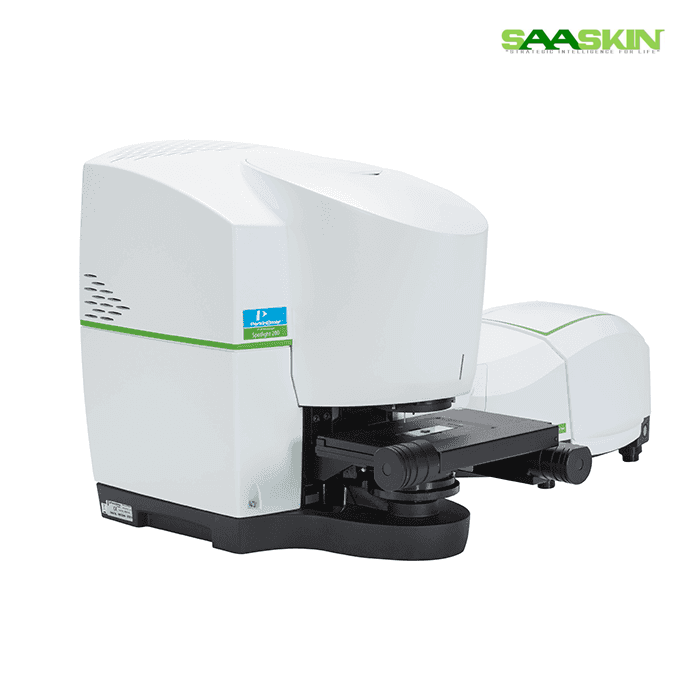
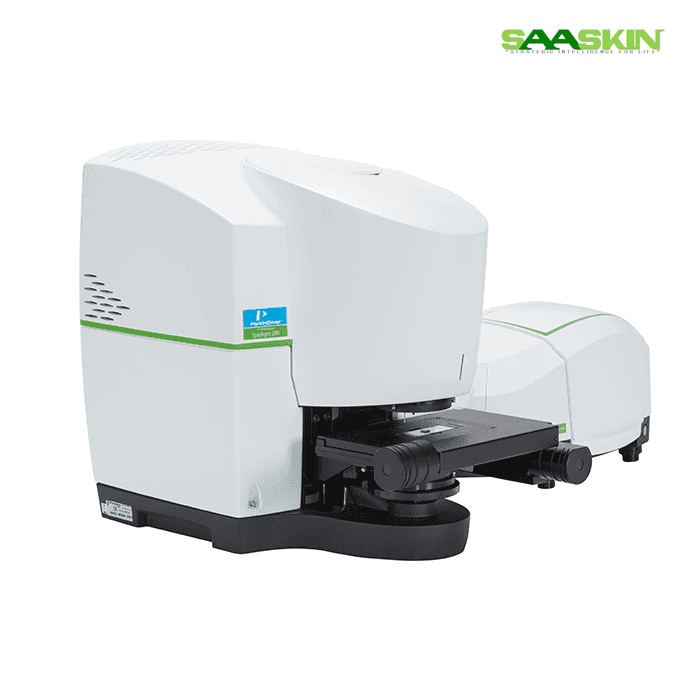
Spotlight IR microscope systems are designed to meet the challenges of an expanding laboratory by generating high-quality, reproducible data from a variety of sample types. The Spotlight encompasses intelligent technology
Exceptional Imaging and Spectral ResolutionEquipped with reflective Cassegrain objectives (15x, 36x), the Spotlight 200i achieves spot sizes down to 10 m, supporting high-resolution imaging. This, combined with a spectral resolution better than 0.5 cm1, enables detailed analysis across a wide range of mid- and far-IR applications. The integrated color digital video and autofocus ensure precise sample visualization and placement for optimal measurement results.
Robust Automation and Advanced SoftwareThe fully motorized XY stage, programmable mapping, and batch automation streamline your workflows, accommodating up to 1,000 x 1,000 data points for large-area mapping. Operated via Spectrum IR software, the system offers advanced image processing, chemometric analysis, and flexible data export formats (.SP, .CSV, .JPG, .PDF). Its user-friendly interface integrates seamlessly with laboratory PCs for enhanced productivity.
Reliable and Versatile Laboratory OperationDesigned with a purgeable sample region, low-humidity enclosure, and robust housing materials, the Spotlight 200i ensures stable performance in demanding environments. Variable temperature control (ambient to 100C) and illumination options enhance versatility. Its connectivity via USB and Ethernet makes data management efficient for users in research, manufacturing, or forensic settings.
FAQ's of PerkinElmer Spotlight 200i FT-IR Microscopy System with Spectrum Two:
Q: How does the Spotlight 200i FT-IR Microscopy System improve sample analysis precision?
A: The Spotlight 200i employs reflective Cassegrain objectives and an advanced autofocus digital video system to ensure samples are accurately positioned and imaged. With a spectral resolution of better than 0.5 cm1 and a minimum spot size of 10 m, users can achieve highly detailed micro-IR measurements, essential for applications requiring precise chemical and morphological information.
Q: What types of samples and industries can use the Spotlight 200i system?
A: The system is versatile across various sectors, including forensics, polymers, pharmaceuticals, and materials science. It can analyze a wide array of samples, from microscopic particulates to thin films, delivering both single-point and high-throughput mapping data on structural and chemical composition.
Q: When should I use the batch automation and programmable mapping features?
A: Batch automation and programmable mapping are ideal for high-throughput or repetitive analyses involving multiple samples or large area mappings. Activating these features via Spectrum IR software increases efficiency, reproducibility, and reduces manual intervention, particularly valuable for research labs and quality control environments.
Q: Where can data from the system be exported and in which formats?
A: Data can be exported directly from the system to connected workstations via USB or Ethernet. Supported formats include .SP, .CSV, .JPG, .PDF, as well as standard infrared file extensions, facilitating integration with most laboratory information management systems and data analysis software.
Q: What is the process for achieving low-humidity and controlled environments during measurements?
A: The Spotlight 200i features a purgeable sample region and enclosure, allowing users to introduce dry air or inert gas to minimize humidity. This is crucial for sensitive IR measurements where environmental factors could interfere with data quality. The process is straightforward and enhances measurement reliability.
Q: How does the system benefit micro-IR spectroscopy work?
A: With its exceptional sensitivity (via MCT and DTGS detectors), automated stage, high mapping speed (up to 160 spectra per second), and precision optics, the system accelerates complex micro-IR workflows. Automations and software integration boost productivity and enable detailed spatial and chemical analyses that might otherwise require multiple, less advanced instruments.











 Accepts only Export inquiries



 Send Inquiry