Product Description
Brand Bruker
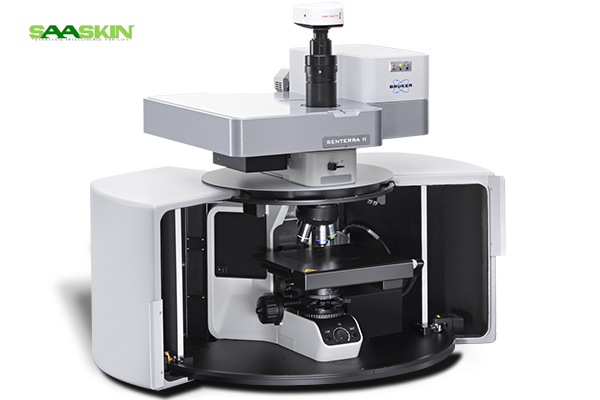
Model SENTERRA II
Capacity Fast 3D Raman imaging
CAT No SENTERRA II
Application Spectroscopy
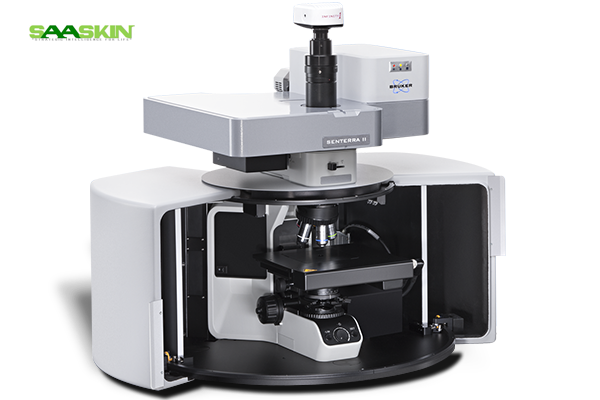
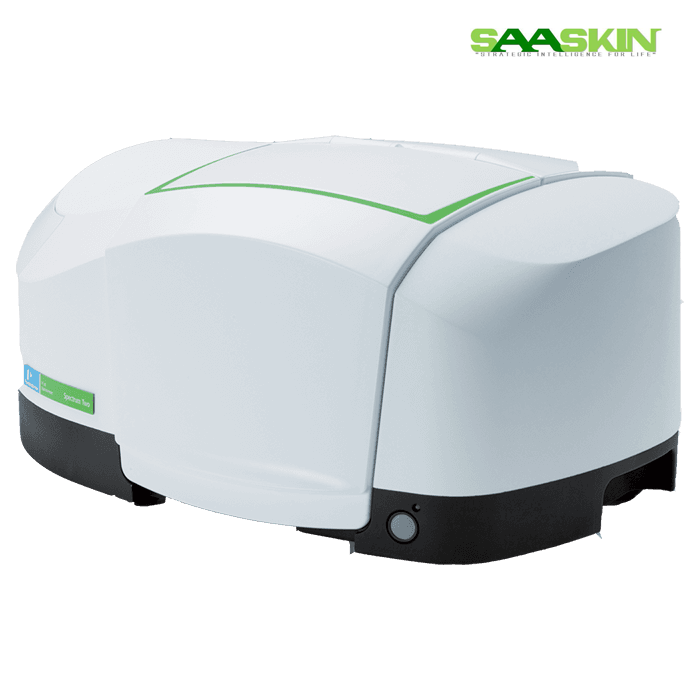
The SENTERRA II is a confocal Raman microscope designed for straightforward, non-stop operation. Its high degree of automation allows fast and easy Raman imaging for failure analysis, quality control and scientific research.
Comprehensive Multi-Laser AnalysisThe Senterra-II supports up to three configurable Raman excitation lasers (532 nm, 633 nm, and 785 nm), enabling flexible analysis of a wide array of materials. This range allows users to select optimal wavelengths for specific sample types, reducing fluorescence and improving spectral quality. The system's automated laser switching ensures seamless operation, making it ideal for laboratories that require versatile chemical and structural analysis across numerous applications.
Advanced Imaging and Mapping CapabilitiesUtilizing a motorized stage, auto/manual Z-focus, and integrated OPUS software, the Senterra-II provides automated high-resolution Raman mapping and imaging. The built-in color video camera simplifies sample positioning, while multiple objective lenses offer customizable magnification. Automated functions facilitate precise, repeatable measurements, streamlining workflow for both routine analysis and advanced research projects.
Safe, Reliable, and User-Friendly DesignWith a fully enclosed Class 1 laser-safe housing and intuitive color touchscreen interface, the Senterra-II ensures both operator safety and ease of use. Automated wavelength calibration, low-maintenance components, and self-diagnostic features provide added reliability and reduce downtime. Its bench-top portability and robust stainless steel construction make it durable and adaptable to varied laboratory environments.
FAQ's of Bruker Senterra-II Dispersive Raman Microscope Spectrometer:
Q: How does the Bruker Senterra-II facilitate automated Raman mapping and imaging?
A: The Senterra-II integrates a motorized stage and auto/manual Z-focus control, working seamlessly with OPUS software to enable automated Raman mapping and imaging. This setup allows users to program mapping routines, ensuring detailed spatial analysis of samples with minimal manual intervention.
Q: What types of samples can be analyzed with the Senterra-II Raman Microscope Spectrometer?
A: The system accommodates a wide variety of samples, including solids, powders, liquids, and thin films. Sample holders are designed for versatility, supporting both standard and specialized research needs across numerous scientific and industrial disciplines.
Q: When should different laser wavelengths be used for Raman analysis?
A: Laser wavelength choice depends on sample characteristics: 532 nm often delivers higher Raman scattering but may produce more fluorescence in some materials; 633 nm and 785 nm reduce fluorescence, making them suitable for samples prone to interference. Users select the optimal wavelength to obtain the highest quality spectra for their specific application.
Q: Where can the Senterra-II be installed and how portable is it within the laboratory?
A: Designed as a bench-top system, the Senterra-II is portable within laboratory environments and can be repositioned as needed. Its robust, compact construction ensures stable performance in a variety of analytical and research settings.
Q: What is the process for calibrating the Senterra-II Raman spectrometer?
A: The Senterra-II features automated wavelength calibration, initiated via its OPUS software. This process systematically aligns the instrument using reference standards, ensuring precise and reliable spectral results without extensive manual adjustments.
Q: How does the Senterra-II's safety enclosure benefit laboratory users?
A: The Class 1 laser-safe enclosure completely contains laser radiation, allowing safe operation without the need for additional protective measures. This design provides a secure environment for all users, meeting stringent lab safety requirements.
Q: What are the primary benefits of using the Senterra-II for chemical analysis?
A: The Senterra-II delivers high spectral resolution, automated mapping, and multi-laser flexibility, enabling accurate, reproducible chemical identification. Its user-friendly interface and low-maintenance design maximize efficiency, while advanced safety and automated features ensure reliable operation in demanding lab settings.











 Accepts only Export inquiries



 Send Inquiry