Product Description
Brand Shimadzu
Model 1720
Capacity 52.5 X-ray
CAT No EPMA-1720
Application Spectroscopy
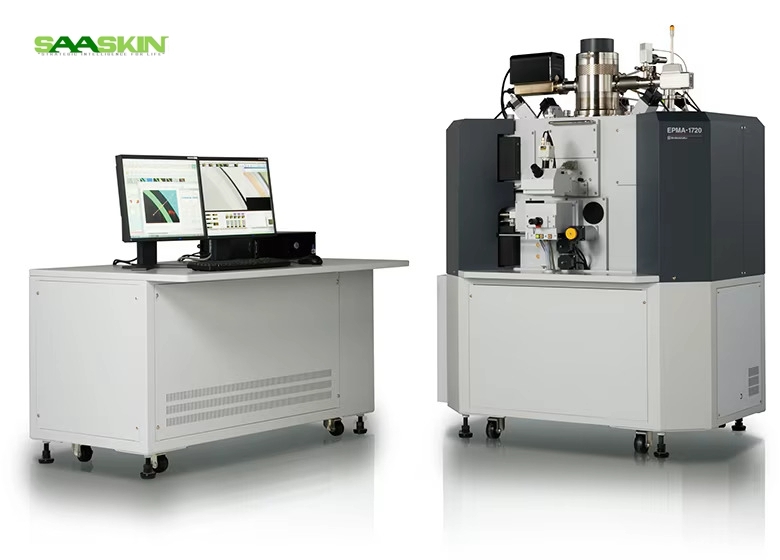
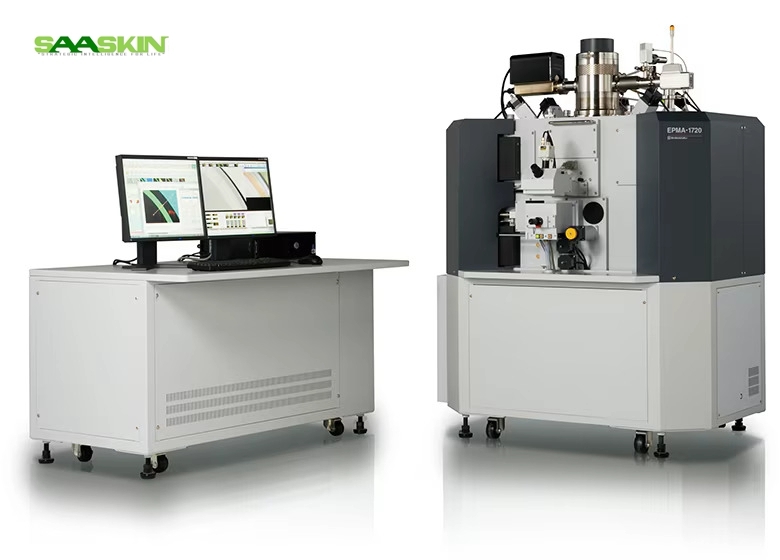
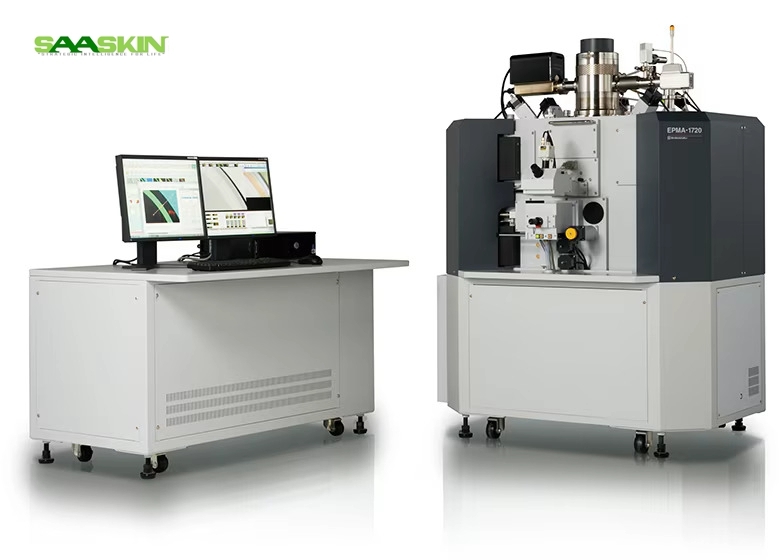
Both hardware and software incorporate the latest technologies to create the next generation of EPMA. New functions that offer simple and easy-to-understand operation have been added to the superb basic EPMA performance that Shimadzu has fostered over many years high sensitivity, high accuracy, and high resolution to allow the EPMA's capabilities to be exploited to the fullest. While easy enough for even novices to use, it also supports sophisticated analysis by experienced users.
Advanced Multi-Element MicroanalysisWith four wavelength-dispersive spectrometers, the EPMA-1720 enables simultaneous detection and mapping of multiple elements from boron to uranium. This capability delivers rapid and comprehensive data, supporting complex research and quality control applications. The WDS technology provides exceptional elemental sensitivity and sub-micron spatial resolution for the most demanding analytical tasks.
High-Vacuum Stability and Flexible Sample HandlingThe system features a high-performance vacuum chamber designed for stable, contamination-free analysis. A robust, integrated vacuum system ensures consistent conditions even during prolonged or automated measurement runs. The spacious sample chamber accommodates large specimens (up to 150 mm diameter), while the 5-axis motorized stage simplifies navigation and orientation for precise targeting of regions of interest.
User-Friendly Automation and Versatile OperationWith advanced analytical software, users can perform both qualitative and quantitative elemental analyses efficiently. Automated stage movement, digital display, and a comprehensive temperature control range (room temperature to 1000C) enable seamless adaptation to complex workflows. The system's automatic operation and robust design make it suitable for a range of research laboratories and industrial settings.
FAQ's of Shimadzu EPMA - 1720 Electron Probe Micro Analyzer:
Q: How does the Shimadzu EPMA-1720 achieve high spatial resolution and elemental sensitivity?
A: The EPMA-1720 is designed with a high-vacuum system and employs four wavelength-dispersive spectrometers (WDS), allowing for sub-micron spatial resolution and high elemental sensitivity across a range of elements from boron to uranium.
Q: What types of samples and elements can be analyzed using the EPMA-1720?
A: This analyzer is ideal for solid samples with diameters up to 150 mm. It can detect and quantify elements from boron (B) to uranium (U), making it suitable for a wide range of research and industrial applications.
Q: When should I use the automated multi-element analysis feature?
A: The automated multi-element analysis is beneficial when you need simultaneous data on several elements across a sample, reducing analysis time and ensuring consistent results, especially for complex matrices or large batches.
Q: Where is the EPMA-1720 typically installed and used?
A: The Shimadzu EPMA-1720 is commonly found in materials research laboratories, geological institutes, quality control departments, and industrial research settings across dealer, distributor, exporter, manufacturer, and supplier networks in India.
Q: What is the process for preparing and loading a sample into the EPMA-1720?
A: Samples should be clean and appropriately mounted on holders compatible with the 150 mm chamber. Once loaded onto the motorized 5-axis stage, the advanced software and automated features guide precise positioning and analysis setup.
Q: How does the EPMA-1720 benefit research and industrial users?
A: Its high accuracy, automation, and ability to analyze multiple elements quickly lead to faster decision-making, reduced operator workload, and highly detailed elemental mapping-vital for quality control, failure analysis, and advanced material research.
Q: What are the operational requirements for the EPMA-1720?
A: The analyzer requires a stable AC electric supply at 220 V, a controlled room temperature environment (15C to 30C), and sufficient space (about 1750 x 950 x 1750 mm) to accommodate its approximately 800 kg weight.










 Accepts only Export inquiries



 Send Inquiry