Product Description
Brand Bruker
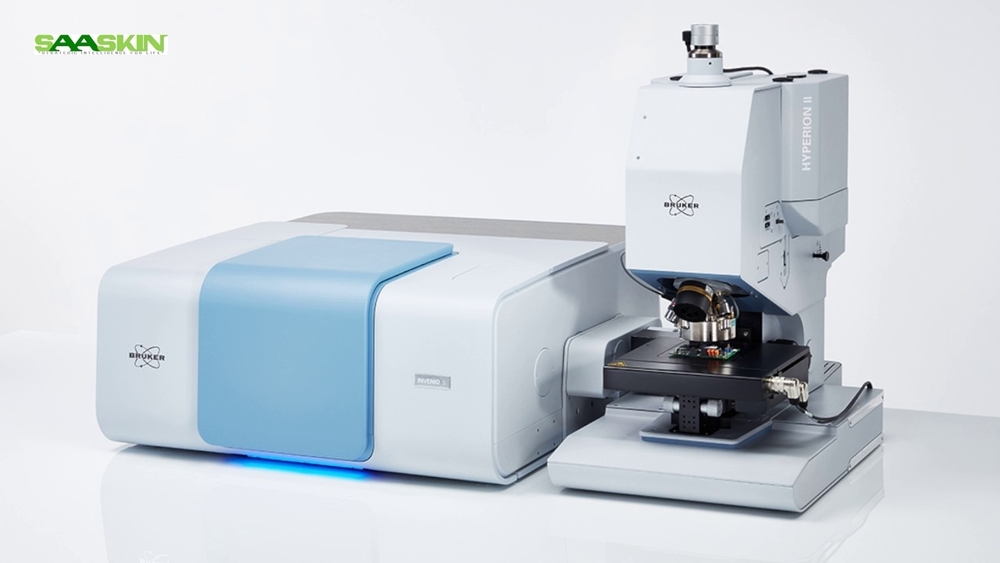
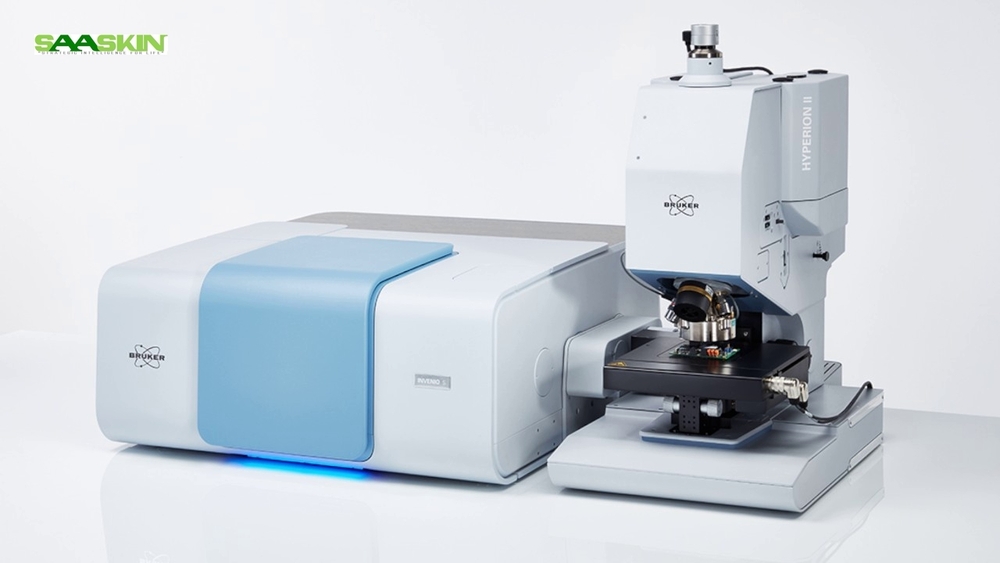
Model HYPERION II
Capacity 64 x 64 or 128 x 128 pixel
CAT No HYPERION II
Application Spectroscopy
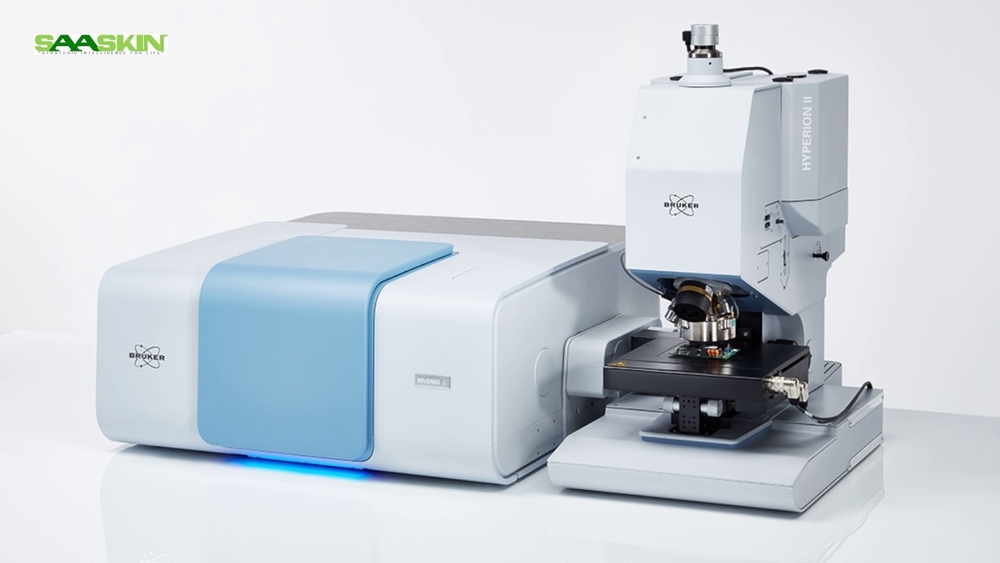
The HYPERION II is our versatile FT-IR microscope for research and development with flexible accessories and the possibility to combine Infrared Laser Imaging (QCL) and FT-IR in one instrument.
High-Speed Chemical ImagingThe HYPERION II Microscope leverages the power of Quantum Cascade Laser (QCL) and FT-IR technology to provide ultra-fast imaging, capable of capturing up to 20 infrared images per second. This enables rapid large-area chemical mapping-ideal for applications requiring high throughput without compromising resolution.
Versatile Sample and Detector OptionsThe system is compatible with a range of objective lenses, supporting magnifications such as 15x and 36x, and offers both single and multi-element detectors including MCT and DLaTGS. This versatility allows for tailored imaging conditions to suit diverse sample types and analysis requirements, with sample compatibility up to 110 mm diameter.
User-Friendly Automation and SoftwareIntegration with the OPUS software suite offers powerful acquisition, visualization, and chemometric tools. The fully automated design, featuring automated alignment, calibration, and a high-resolution touchscreen control, ensures both consistency and ease of use for researchers at all levels.
FAQ's of Bruker HYPERION II FT-IR and QCL Microscope:
Q: How does the HYPERION II FT-IR & QCL Microscope achieve rapid chemical imaging?
A: The microscope utilizes innovative Quantum Cascade Laser (QCL) technology and advanced FT-IR optics, enabling chemical mapping at speeds of up to 20 images per second. This is supported by motorized sample stages and multi-element detector options for efficient and high-resolution spectral imaging.
Q: What types of samples and analysis tasks can be performed with this instrument?
A: The HYPERION II is suitable for a wide variety of applications, including material characterization, forensic analysis, life sciences, and micro-analytical mapping. It accommodates samples up to 110 mm and provides flexible magnification, making it ideal for both large and micro-sized specimens.
Q: Where can the data acquired by the microscope be exported and analyzed?
A: The system produces data in both standard and proprietary spectral image formats, which can be conveniently exported to formats like CSV and XML. These exported files can be further processed and analyzed using the OPUS software suite or other compatible data analysis software.
Q: What is the process for maintenance and calibration?
A: The HYPERION II is designed for low maintenance, featuring automated self-alignment and calibration. Regular checks are minimal, and the active air cooling system ensures stable performance with reduced manual intervention.
Q: When should I use the multi-element detectors or switch objective lenses?
A: Multi-element detectors are best for high-speed mapping and larger area imaging, while interchangeable IR objectives (like 15x or 36x) provide optimal magnification for different sample types. Choose based on the sample size, required resolution, and specific imaging goals.
Q: How does the microscope benefit high-throughput laboratories?
A: With its rapid imaging speed, automated stage, and large sample handling capacity, the system streamlines high-volume sample analysis. Automated workflows and powerful software integration significantly boost efficiency and reproducibility in busy lab environments.










 Accepts only Export inquiries



 Send Inquiry