Product Description
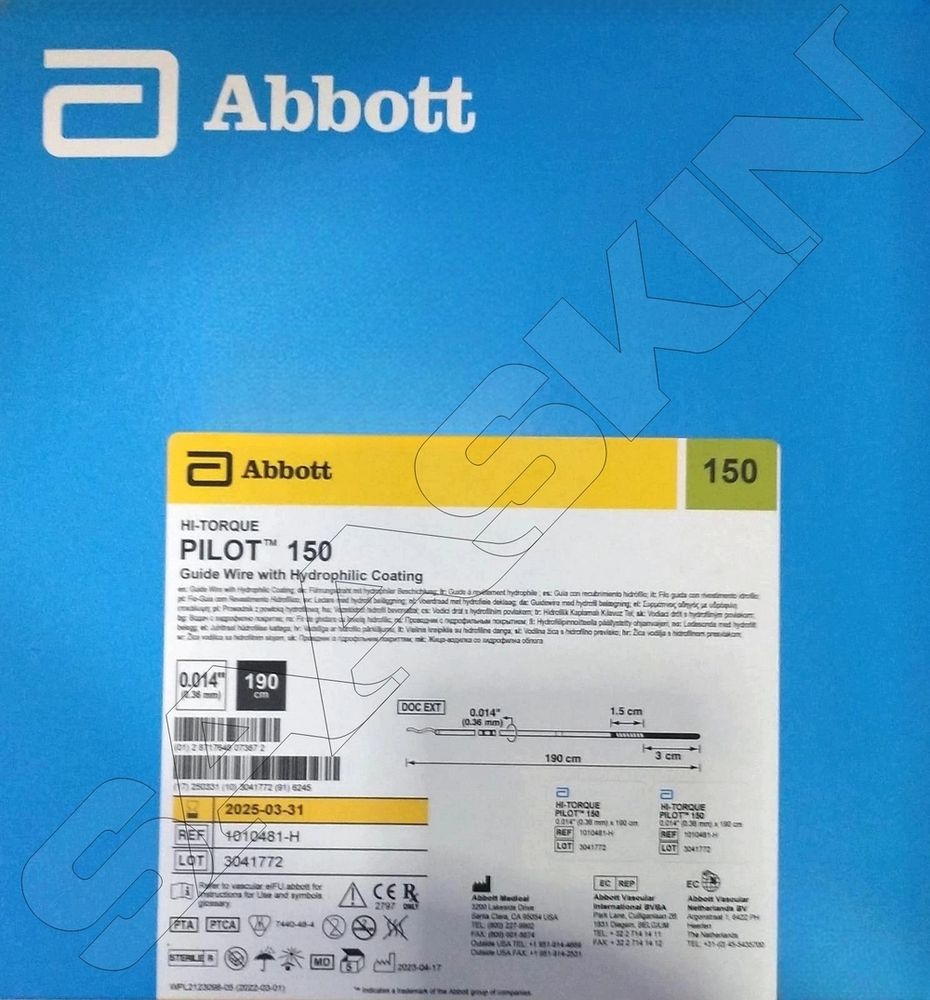
| Abbott | Abbott |
| Tip Radiopacity | 3 cm |
| Tip Shape | Straight, J Shaped |
| CAT No | 1010481-H, 1010481-HJ |
| Wire Length | 190 cm |
HI-TORQUE Guide Wires are intended to facilitate the placement of balloon dilatation catheters during percutaneous transluminal coronary angioplasty (PTCA) and percutaneous transluminal angioplasty (PTA).
Optimized for Complex Lesion NavigationWith advanced HI-TORQUE technology and a 0.014-inch pre-shaped hydrophilic tip, this guide wire is engineered for accurate navigation through severe or tortuous anatomy. The exceptional flexibility and torque response empower clinicians to safely and efficiently cross complex lesions, reducing procedural time and improving patient outcomes.
Superior Visualization and ControlThe guide wire features radiopaque distal tip and segment, making it highly visible during interventions. The core is constructed from one-piece stainless steel, delivering reliable support and enhanced control. Compatibility with standard catheter systems ensures seamless integration into diverse interventional setups.
Reliable Sterility and PackagingAbbott's guide wire is sterile, supplied in individually packed units, and maintains safety through ethylene oxide (EO) gas sterilization. Designed for single use, its shelf life extends up to three years. Proper storage in cool, dry conditions supports product integrity and optimal performance.
FAQ's of Abbott HI-TORQUE PILOT 150 Guide Wires (190 cm):
Q: How does the hydrophilic coating benefit the guide wire during procedures?
A: The hydrophilic coating minimizes friction, facilitating smooth advancement through vasculature and enabling easier navigation across complex or tight lesions without trauma to vessel walls.
Q: What is the main usage of the Abbott HI-TORQUE PILOT 150 Guide Wire?
A: This guide wire is primarily employed in coronary and peripheral interventional procedures to cross complex arterial lesions, given its optimal length, flexibility, and precision.
Q: When should I choose this guide wire for my intervention?
A: Select this guide wire when encountering challenging anatomy or severe stenosis, especially in cases needing high navigation precision and superior torque response for intricate pathways.
Q: Where can the HI-TORQUE PILOT 150 Guide Wire be effectively utilized?
A: It is suitable for use in hospitals, cardiac labs, and interventional suites across India, wherever high-performance guide wires are required for cardiovascular and peripheral procedures.
Q: What is the process for using the guide wire in a procedure?
A: After opening the sterile packaging, insert the guide wire through the compatible 0.014-inch catheter. Advance under fluoroscopy, utilizing its flexible tip and torque response to cross lesions, then follow standard protocol for wire withdrawal and disposal post-procedure.
Q: Is this guide wire compatible with other procedural instruments?
A: Yes, the Abbott HI-TORQUE PILOT 150 is compatible with all standard 0.014-inch catheters used in interventional cardiology, ensuring smooth integration with existing equipment.
Q: What are the benefits of the guide wire's pre-shaped tip and radiopaque design?
A: The pre-shaped tip enhances directional control and easing entry into complex pathways, while the radiopaque distal tip and segment allow clear visualization during procedures, improving accuracy and procedural safety.












 Accepts only Export inquiries



 Send Inquiry