Product Description
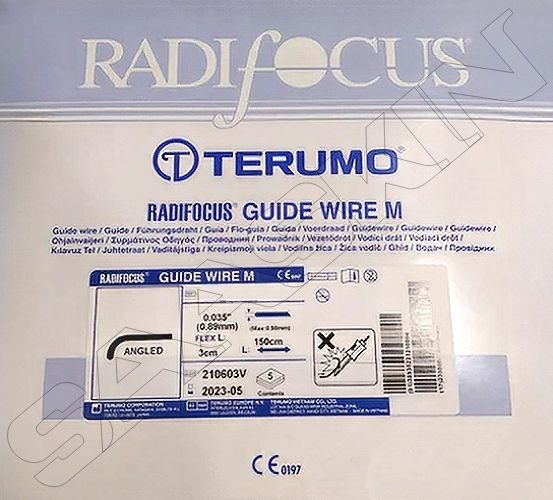
| Brand | Terumo |
| Tip Radiopacity | 3 cm |
| Tip Shape | Straight & J - Angled |
| CAT No | RF-GS35151M & RF*GA35153M |
| Wire Length | 150 cm |
RadifocusTM Guide Wire M Standard type is a Nitinol hydrophilic guide wire covered with polyurethane containing tungsten and a hydrophilic polymer coating (M Coat) for vessel access, lesion crossing and device support.
Exceptional Flexibility and Kink ResistanceBuilt with a nitinol core, the Terumo Radifocus Guide Wire offers superior flexibility and maintains its shape even during complex vascular procedures. Its kink-resistant design ensures smooth passage through tortuous vessels, reducing the risk of wire deformation and enhancing procedural efficacy.
Hydrophilic Coating for Smooth Device NavigationThe advanced hydrophilic polymer coating on the wire, especially the AQUA-coated tip, significantly lowers friction, facilitating effortless and atraumatic device insertion into blood vessels. This coating enables seamless catheter placement and minimizes vessel injury for patient safety.
Radiopaque Tip for Accurate PlacementThis guide wire features a radiopaque tip, making it easily visible under fluoroscopy. This property helps clinicians achieve high placement accuracy and precise control during interventional radiology or cardiology procedures, ensuring reliable outcomes while navigating complex vascular anatomies.
FAQ's of Terumo Radifocus Guide Wire M Standard Type:
Q: How does the hydrophilic polymer coating benefit the Radifocus Guide Wire M Standard Type?
A: The hydrophilic polymer (AQUA-coated) tip reduces friction, allowing the guide wire to navigate smoothly through blood vessels. This decreases the risk of vessel trauma and enhances ease of catheter or device placement during vascular procedures.
Q: What is the primary use of the Terumo Radifocus Guide Wire?
A: This guide wire is used primarily for facilitating vascular access and assisting in the placement of catheters and other medical devices in interventional radiology and cardiology. It acts as a guide to ensure accurate insertion into blood vessels.
Q: When should the Radifocus Guide Wire be used during a procedure?
A: The guide wire should be used during vascular procedures when there is a need to safely and accurately place catheters or other devices into blood vessels, particularly when device maneuverability and vessel protection are critical.
Q: Where can the Radifocus Guide Wire M Standard Type be applied clinically?
A: This guide wire is suitable for use in hospitals and clinical settings specializing in interventional radiology and cardiology procedures, including catheterizations and other vascular interventions.
Q: What process is recommended for storing the Radifocus Guide Wire?
A: It is recommended to store the guide wire in a cool, dry place away from direct sunlight to maintain sterility and preserve the integrity of the hydrophilic coating throughout its three-year shelf life.
Q: How does the radiopaque tip aid in procedural accuracy?
A: The radiopaque tip enhances visibility under fluoroscopy, enabling medical professionals to track the wire's position in real time and achieve precise placement of catheters or devices for optimal procedural success.
Q: What are the benefits of the nitinol core in this guide wire?
A: The nitinol core imparts flexibility, superior torque response, and shape retention, which reduces the risk of kinking and allows for reliable performance during complex and lengthy vascular procedures.











 Accepts only Export inquiries



 Send Inquiry