Product Description
Brand Thermo Fisher Scientific
Model HAAKE
Capacity 0.000001 to 100 Hz
CAT No 379-0340
Application Rheometers
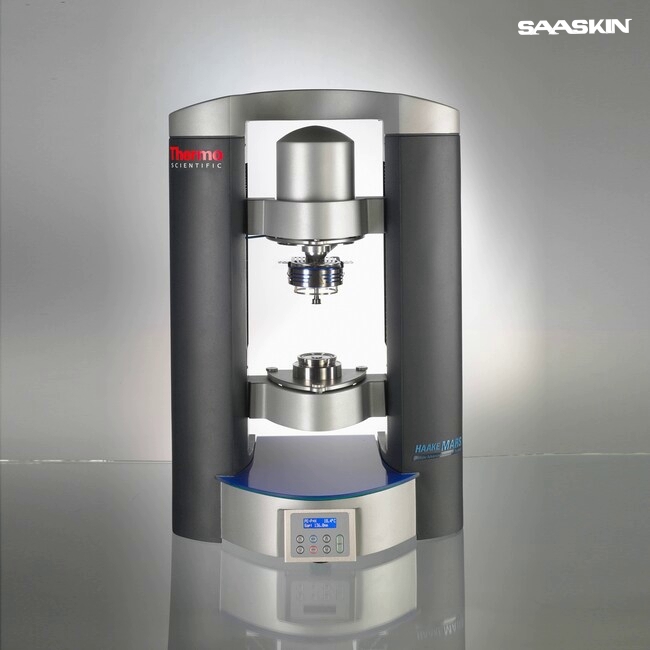
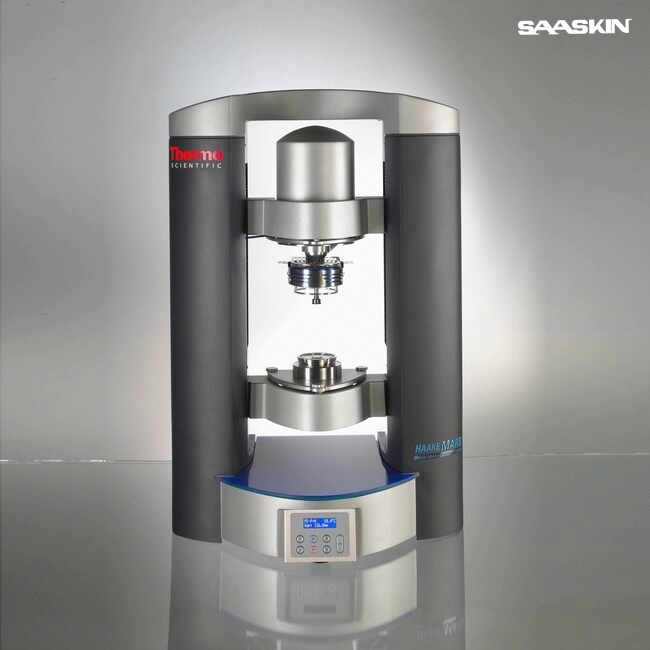
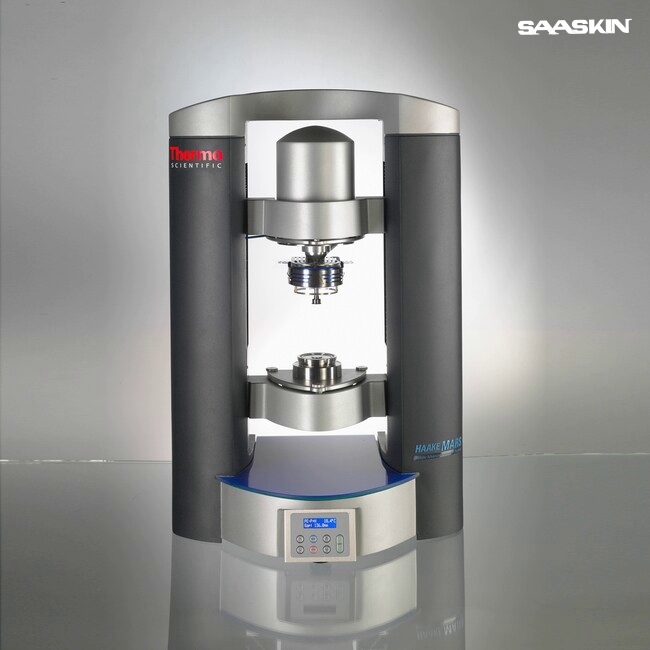
Meet the demands of advanced quality control and applied R&D with the Thermo Scientific HAAKE MARS Rheometer. This highly flexible Modular Advanced Rheometer System (MARS) provides accuracy, easy handling, and many application-oriented solutions for comprehensive material characterization. New Connect Assist functionality allows for effortless, error-free exchange of measuring geometries and temperature modules to speed up your workflow. Bring the HAAKE MARS' flexibility to your lab for rapidly changing testing requirements today and into the future.
Unmatched Measurement FlexibilityThanks to its wide torque and viscosity range, the HAAKE MARS Rheometer adapts effortlessly to diverse sample types, from low-viscosity solutions to highly viscous polymers. The tool-free modular platform allows quick reconfiguration for various testing setups, while its advanced temperature modules facilitate accurate analysis across broad thermal conditions, catering to evolving research and quality control needs.
Seamless Data Management and IntegrationData output is straightforward with robust export options including CSV, PDF, and direct database interfacing. USB, Ethernet, and RS232 ports make integrating the instrument with PCs and laboratory systems easy, while RheoWin Software offers precise control, real-time data collection, and comprehensive analysis, streamlining workflows across all application areas.
Safety and Compliance at the CoreThe HAAKE MARS Rheometer prioritizes operator safety, featuring automatic overload protection, an emergency stop button, and secure temperature management. It satisfies international safety and quality standards like CE, ISO 9001, and EN 61010-1, making it a reliable choice for regulated environments and demanding scientific applications.
FAQ's of Thermo Scientific HAAKE MARS Rheometers:
Q: How does the modular platform of the HAAKE MARS Rheometer benefit different laboratory workflows?
A: The modular platform enables users to quickly swap measuring systems and temperature modules without tools, allowing the instrument to adapt to various testing methods and sample types. This flexibility streamlines workflows and supports both routine and specialized analyses in research and quality control.
Q: What types of applications can be addressed using the HAAKE MARS Rheometer?
A: This rheometer supports a wide range of applications, including rheological evaluation of polymers, pharmaceuticals, cosmetics, food, petrochemicals, and adhesives. It is used in material development, formulation studies, quality control, and scientific research requiring precise viscosity and flow behavior measurements.
Q: When should I use the automatic overload protection and emergency stop features?
A: Automatic overload protection engages whenever excessive torque or force is detected, safeguarding the instrument and sample. The emergency stop button should be used if an unexpected event or safety risk arises during operation, providing immediate shutdown to prevent damage or injury.
Q: Where can I utilize the HAAKE MARS Rheometer for optimal results?
A: This instrument is well-suited for laboratories and facilities that maintain ambient conditions between 15-40C and relative humidity below 80%, such as R&D centers, quality assurance labs, and academic institutions. Its advanced capabilities make it valuable in regulated and high-throughput environments.
Q: What is the process for exporting and managing measurement data from the HAAKE MARS Rheometer?
A: Data can be easily exported via USB, Ethernet, or RS232 interfaces. The system supports output in CSV and PDF formats, and offers direct database interfacing as well. HAAKE RheoWin Software facilitates data collection, real-time monitoring, analysis, and streamlined reporting.
Q: How accurate are the measurements provided by this rheometer?
A: The HAAKE MARS Rheometer offers high precision with a torque accuracy of 0.1 nNm and angular displacement measurements as fine as 0.1 rad. This ensures reliable, repeatable results even for demanding rheological analyses.










 Accepts only Export inquiries



 Send Inquiry