Product Description
| Brand | Abbott |
| Sample Type | Whole Blood |
| Pack Size | 30T |
| CAT No | 625000 |
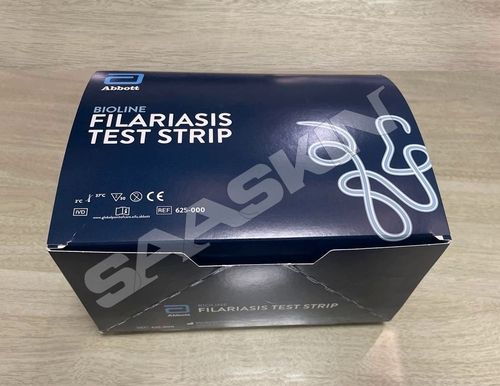
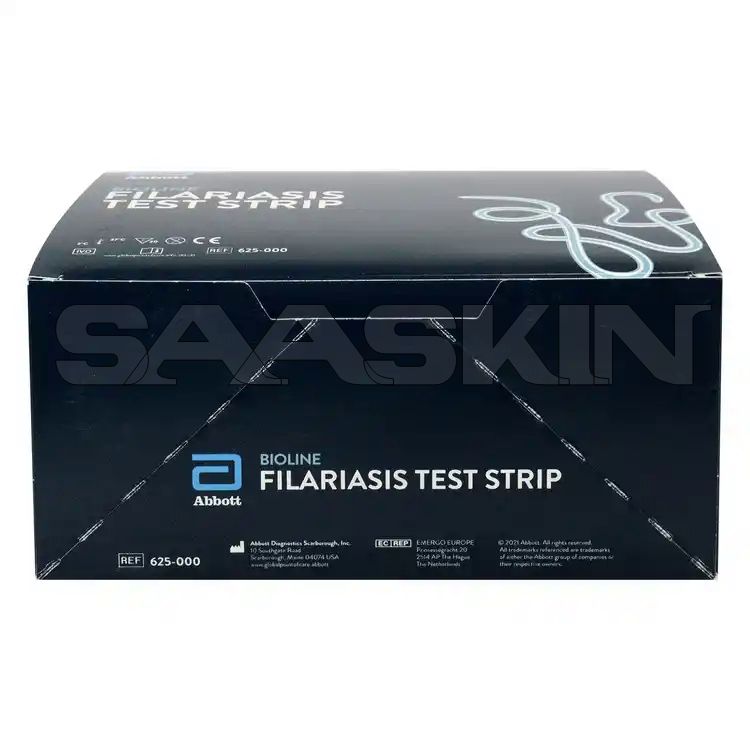
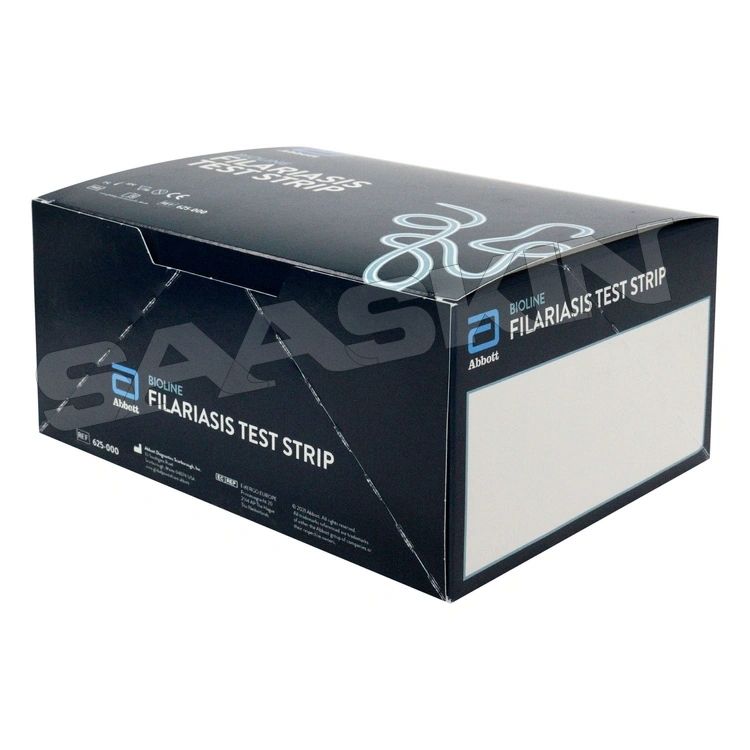
The Bioline Filariasis is an in vitro, visually read, immunochromatographic test for the qualitative detection of circulating filarial antigen from Wuchereria bancrofti.
Efficient Detection of Wuchereria bancroftiThe Bioline Filariasis Test Strip streamlines the diagnosis of lymphatic filariasis by providing rapid, accurate, and easy-to-interpret results. Designed for use with various sample types, it is ideal for both clinical laboratories and field settings, aiding healthcare professionals in timely decision-making and patient management.
Portable and Convenient for Healthcare ProfessionalsThis lightweight, compact test strip can be easily transported and stored without specialized environmental controls, ensuring reliability in a variety of healthcare scenarios. Each strip is single-use and ready to go upon opening the individual foil pouch, requiring no special equipment other than standard manual application.
FAQ's of Abbott Bioline Filariasis Test Strip:
Q: How do I use the Abbott Bioline Filariasis Test Strip?
A: To use the test strip, apply a small amount of whole blood, serum, or plasma sample to the designated area, then wait approximately 10 minutes for visual results. Detailed instructions are provided with each package.
Q: What types of samples are compatible with the test strip?
A: The test strip is compatible with whole blood, serum, or plasma specimens, offering flexibility in sample collection and processing for healthcare professionals.
Q: Where can the test strips be stored, and what are the storage requirements?
A: Store the test strips in their original packaging at a temperature between 2C and 30C, in a dry place, to maintain optimal performance throughout the 18-month shelf life.
Q: What is the process of interpreting the results?
A: Results are visually indicated by lines appearing on the nitrocellulose membrane. One line confirms a valid test (control line), and a second line indicates a positive result for Wuchereria bancrofti antigenaemia.
Q: What are the benefits of using this rapid assay?
A: The main advantages include rapid results within 10 minutes, high accuracy (>99%), simple manual operation, and portability, making the test well suited for both clinical and field use.
Q: How should used test strips be disposed of?
A: Dispose of used strips following standard biohazard protocols to ensure safety and compliance with clinical waste regulations.
Q: When should a healthcare professional consider using this test?
A: Healthcare professionals should use this test when there is a need to detect or rule out Wuchereria bancrofti infection swiftly and accurately, particularly in endemic regions or during screening initiatives.












 Accepts only Export inquiries



 Send Inquiry