Product Description
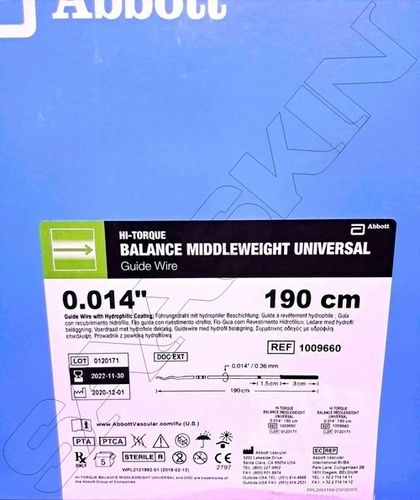
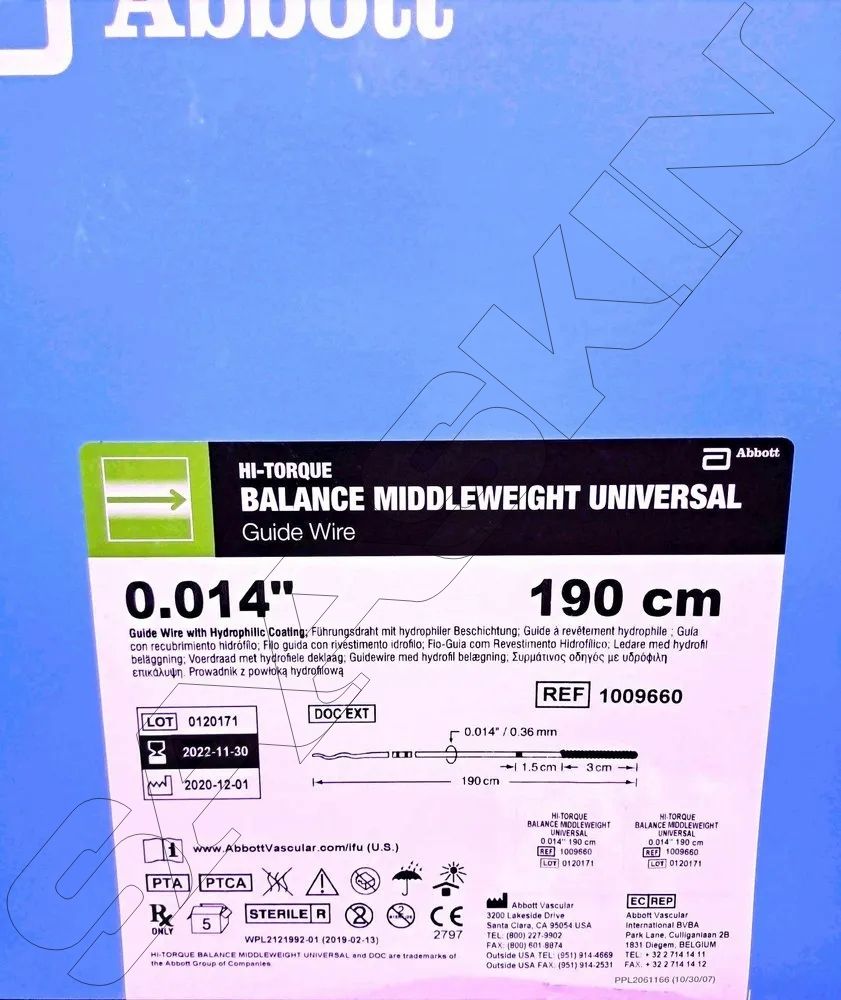
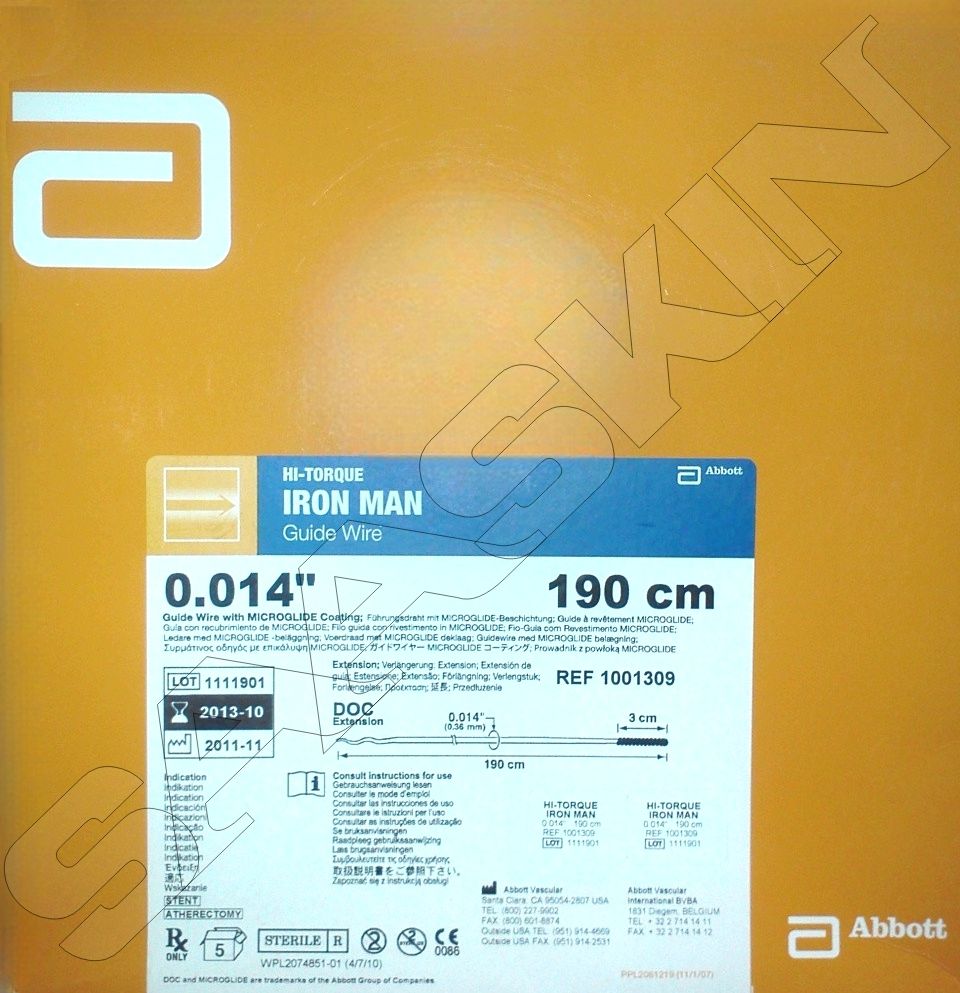
| Brand | Abbott |
| Tip Radiopacity | 3 cm |
| Tip Shape | Straight, J Shaped |
| CAT No | 1009660, 1009660J |
| Wire Length | 190 cm |
All HI-TORQUE Guide Wires are intended to facilitate the placement of balloon dilatation catheters during percutaneous transluminal coronary angioplasty (PTCA) and percutaneous transluminal angioplasty (PTA). Tip Radiopacity 3cm, Tip Shape Straight, Distal Coatings Hydrophilic & Wire Length 190 cm.
Advanced Design for Reliable NavigationEngineered with HI-TORQUE construction, this guide wire achieves superior torque control and maneuverability, crucial for accessing complex lesions in coronary and peripheral vessels. The hydrophilic tip reduces friction, while the radiopaque marker ensures clear visualization under fluoroscopy, leading to efficient and confident navigation.
Safety and Compatibility AssuredThe Abbott HI-TORQUE Guide Wire features a soft, flexible distal tip to minimize vessel trauma and is available in multiple tip shapes to suit various anatomical challenges. Its non-latex, sterile, single-use design further enhances patient safety, and it is fully compatible with most conventional angioplasty and PTCA catheters.
User-Friendly and VersatileThis lightweight, portable guide wire is designed for ease of use in manual, real-time procedures. The hydrophobic proximal coating allows for better control during manipulation, while its balanced support and flexible design contribute to high navigation accuracy in diverse interventional settings.
FAQ's of Abbott HI-TORQUE BALANCE MIDDLEWEIGHT UNIVERSAL Guide Wire:
Q: How should the Abbott HI-TORQUE BALANCE MIDDLEWEIGHT UNIVERSAL Guide Wire be used during vascular procedures?
A: The guide wire is inserted via the chosen access point and navigated through vascular pathways under fluoroscopic guidance. Its hydrophilic tip and superior torque response aid in reaching targeted lesions efficiently, ensuring smooth catheter advancement during angioplasty or interventions.
Q: What are the benefits of the hydrophilic tip and flexible distal design?
A: The hydrophilic tip dramatically reduces friction, allowing for easier passage through tortuous vessels. The soft, flexible distal end helps protect vessel walls by minimizing the risk of trauma during navigation or lesion crossing.
Q: When should this guide wire be selected over other types?
A: This guide wire is ideal for coronary and peripheral vascular procedures requiring effective lesion access, support, and enhanced steerability, especially in cases with complex or highly tortuous vascular anatomy.
Q: Where is the guide wire compatible and approved for use?
A: The device is CE marked and US FDA approved, ensuring compliance with stringent regulatory standards for use in hospitals and interventional labs globally, including India.
Q: What tip shapes are available and how are they chosen?
A: It is offered in round, pre-shaped, and straight tip variations. The selection depends on the vascular anatomy and procedural requirements; pre-shaped and round tips often aid in navigating challenging locations.
Q: How should the product be stored prior to use?
A: Store the guide wire in its original packaging in a cool, dry environment away from direct sunlight to maintain sterility and optimal performance, following the provided storage instructions.
Q: What is the process for ensuring patient safety during use?
A: Being single-use, sterile, and non-latex, the guide wire minimizes infection and allergy risks. Always use according to the manufacturer's guidelines and verify compatibility with the intended catheter systems for safe intervention.











 Accepts only Export inquiries



 Send Inquiry