Product Description
Brand Roche
Sample Type Whole Blood
Test Type Blood Gas
CAT No 05122244001
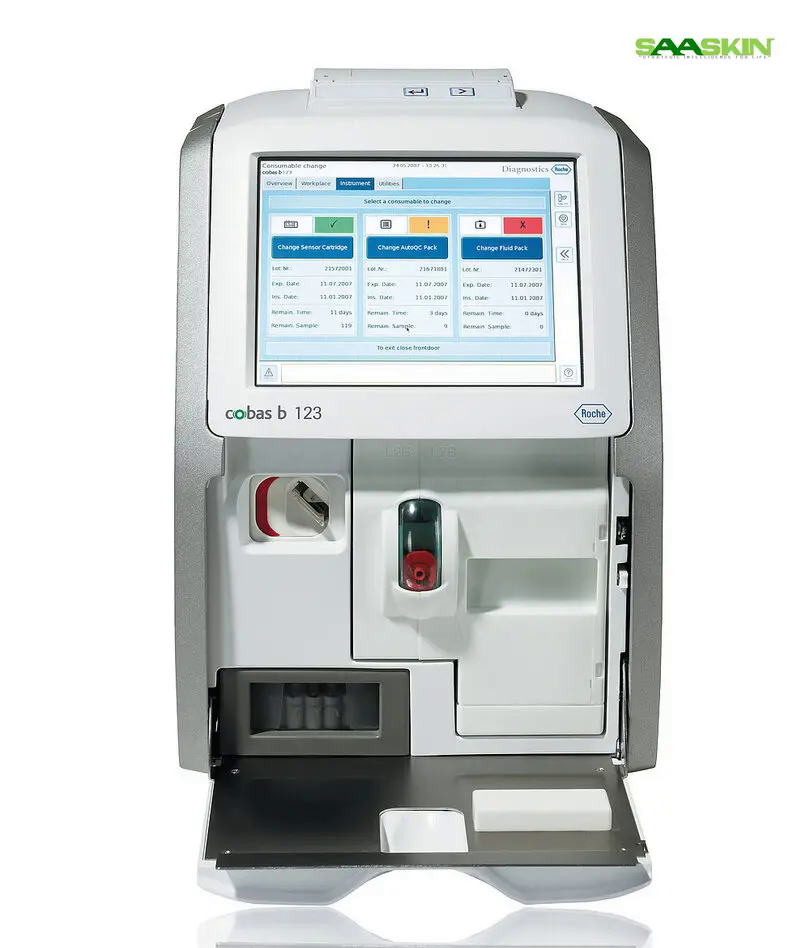
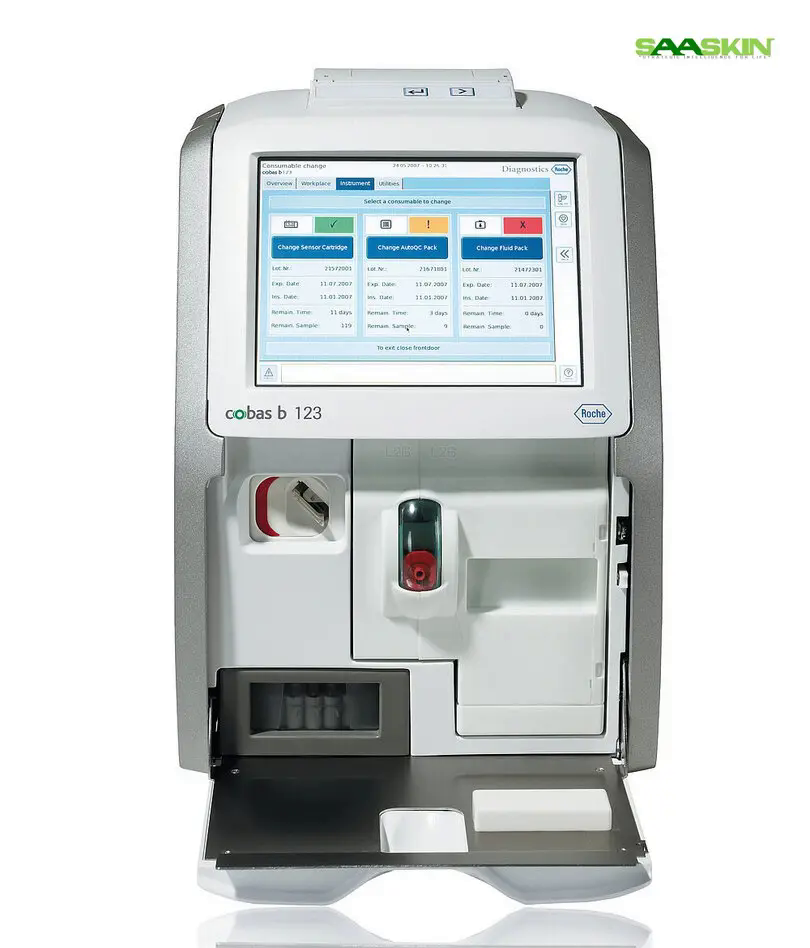
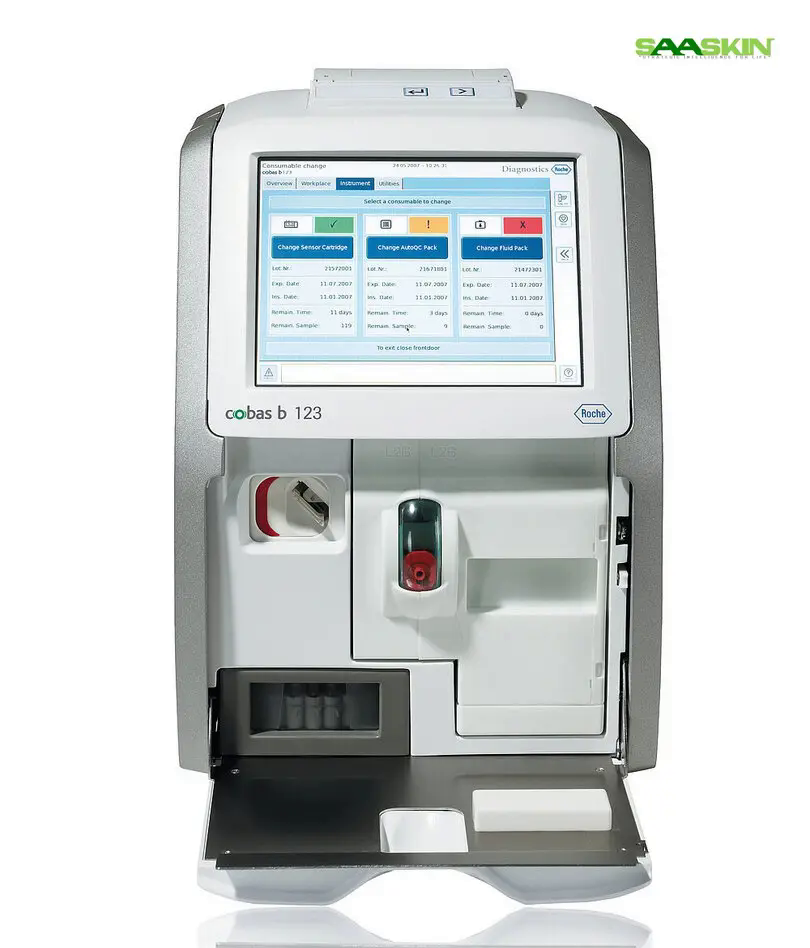
The cobas b 123 POC system is a mobile, cartridge-based, critical care blood gas and electrolytes analyser designed for POC blood gas testing. With flexible configurations and a throughput of up to 30 samples per hour, the cobas b 123 POC system can easily be customized to the clinical needs of the ICU, ER, NICU, OR, dialysis units or the laboratory. The operator-friendly system offers easy handling and requires no preventative maintenance, reducing analyzer downtime. Thus, the cobas b 123 system allows clinically relevant and cost-efficient POC testing.
Comprehensive Multi-Parameter TestingThe Roche Cobas b 123 POC system delivers a broad spectrum of critical parameters-including pH, pCO2, pO2, Na+, K+, Ca2+, Cl-, glucose, lactate, and hematocrit-using electrochemical and optical technology for accurate, rapid assessments. Compatible with arterial, venous, capillary, and whole blood samples, it supports patient care in diverse clinical environments.
User-Friendly Automation and EfficiencyThis analyzer features an intuitive, large color touchscreen interface, automated routine maintenance, and automatic calibration with user-defined schedules. Its sample-to-result automation and rapid throughput of up to 30 tests per hour enable efficient workflow with minimal manual intervention, making it ideal for high-demand critical care and emergency scenarios.
Superior Connectivity and Data ManagementOffering serial port, USB, and Ethernet (HL7/LIS ready) connectivity, the Cobas b 123 ensures seamless data exchange and integration within hospital networks. Onboard storage of up to 10,000 patient results, barcode scanner integration, and visual/audible alarms for error management further enhance clinical efficiency and data reliability.
FAQ's of Roche Cobas b 123 POC system:
Q: How does the Roche Cobas b 123 POC system support point-of-care testing?
A: The Roche Cobas b 123 POC system is designed for rapid, on-site testing in critical environments such as intensive care, emergency rooms, operating rooms, and neonatal units. Its portability, easy touchscreen interface, and sample-to-result automation minimize wait times and provide clinicians with immediate, actionable results.
Q: What types of samples are compatible with the analyzer?
A: The system accepts whole blood samples from arterial, venous, and capillary sources, allowing flexibility for a range of clinical procedures and patient requirements.
Q: When should routine maintenance be performed on the Cobas b 123?
A: Routine maintenance is largely automated and occurs according to the device's schedules, reducing manual intervention. Periodic checks and supply replenishment should follow manufacturer guidelines detailed in the user manual.
Q: Where can the Cobas b 123 POC system be used within a healthcare facility?
A: Its compact, portable design makes the analyzer suitable for various locations, including intensive care units, emergency departments, operating rooms, neonatal units, and transport situations in hospitals and clinics.
Q: What is the process for calibrating the Cobas b 123 system?
A: Calibration is fully automated and can be set to occur at user-defined intervals for optimal accuracy. The device manages this process independently, alerting users only if intervention is required.
Q: How is patient data managed and accessed on this analyzer?
A: The Cobas b 123 can store up to 10,000 patient results and integrates smoothly with hospital information systems via HL7/LIS connectivity. Data can be accessed through the touchscreen, exported via USB, or managed over network connections.
Q: What are the benefits of using the Cobas b 123 POC system for clinical teams?
A: Clinical teams benefit from reduced turnaround times, high-accuracy results, minimal maintenance needs, and intuitive operation. The analyzer's connectivity and automation enable efficient workflows and support timely clinical decision-making.











 Accepts only Export inquiries




 Send Inquiry