Product Description
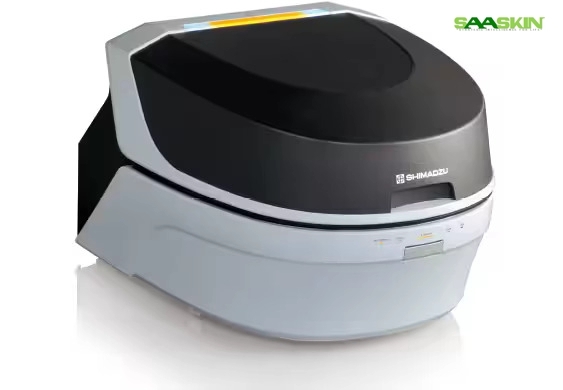
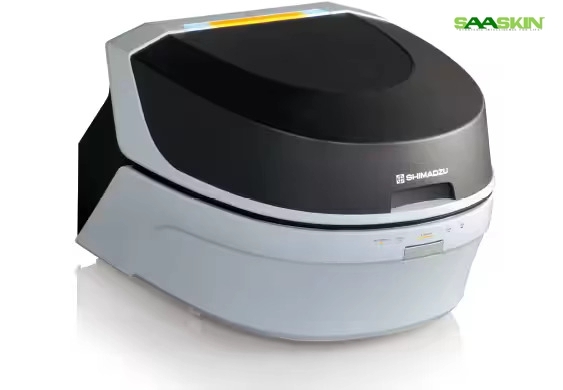
Brand Shimadzu
Model 8100
Capacity High level of sensitivity
CAT No EDX-8100
Application Spectroscopy
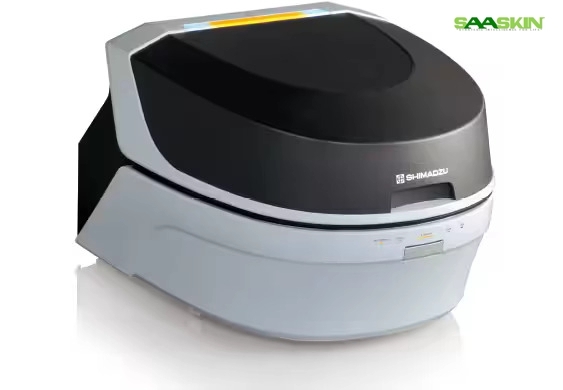
The EDX-8100 energy dispersive X-ray fluorescence spectrometer offers a high level of accuracy and speed in analyzing elements contained in various samples. It supports ultra-light element analysis of 6C to 92U, and can be used in conjunction with the helium substitution option to analyze liquid samples containing light elements (F to Al).
Versatile Elemental AnalysisWith the ability to simultaneously analyze elements from sodium through uranium (Na to U), the Shimadzu EDX-8100 delivers highly sensitive detection in the ppm to percentage range. Its large sample chamber and selectable atmospheric modes make it adaptable for various sample forms and types, including solids, powders, and liquids, supporting laboratories across multiple industries.
Advanced Engineering & Eco-Friendly OperationThe EDX-8100 features a robust metal chassis and precision components, ensuring reliable, long-term operation. Air-cooled technology reduces environmental impact by eliminating the need for external chillers, which also simplifies maintenance and installation. Its modern software and color touchscreen display enhance usability, making elemental analysis more accessible and efficient.
FAQ's of Shimadzu EDX-8100 Energy Dispersive X-ray Fluorescence Spectrometer:
Q: How does the Shimadzu EDX-8100 perform elemental analysis?
A: The EDX-8100 uses energy dispersive X-ray fluorescence (EDXRF) technology. Its 50 kV Rh target X-ray tube excites atoms in the sample, causing them to emit characteristic X-rays. The built-in high-count rate Silicon Drift Detector (SDD) captures these emissions, allowing simultaneous multi-element analysis from Na to U with excellent sensitivity.
Q: What types of samples can be analyzed with the EDX-8100?
A: This spectrometer is designed for the analysis of solids, powders, and liquids. Its spacious sample chamber accommodates samples of various shapes and sizes, making it suitable for applications in research, quality control, material identification, and more.
Q: When is using a helium purge or vacuum mode recommended?
A: Helium purge or vacuum modes are ideal when analyzing light elements (e.g., sodium, magnesium, or aluminum) or samples sensitive to atmospheric interference. These modes improve detection limits for lighter elements compared to standard air analysis.
Q: Where can the EDX-8100 be installed and operated?
A: The EDX-8100 is suited for laboratories, industrial facilities, and quality control environments. It operates effectively at ambient temperatures (15-30 C) and relative humidity below 80% (non-condensing). Its air-cooled design and lack of external chillers facilitate flexible installation.
Q: What is the process for running multiple samples automatically?
A: By utilizing the optional automatic sample changer, users can load up to 12 samples for unattended, sequential analysis. The spectrometer's LabSolutions EDX software manages batch operations, collimator selection, and filter adjustments, maximizing workflow efficiency.
Q: How does the EDX-8100 benefit elemental analysis workflows?
A: The instrument offers rapid measurement-typically 100-300 seconds per sample-plus high sensitivity, excellent reproducibility, and automated features. Its user-friendly interface, advanced software, and multiple data output options (USB, Ethernet, printer) enhance convenience and productivity for various elemental analysis requirements.










 Accepts only Export inquiries



 Send Inquiry