Product Description
Brand             Eppendorf
Product Type       Mechanical Pipette
Pack Size         Refer Below
CAT No           Refer Below
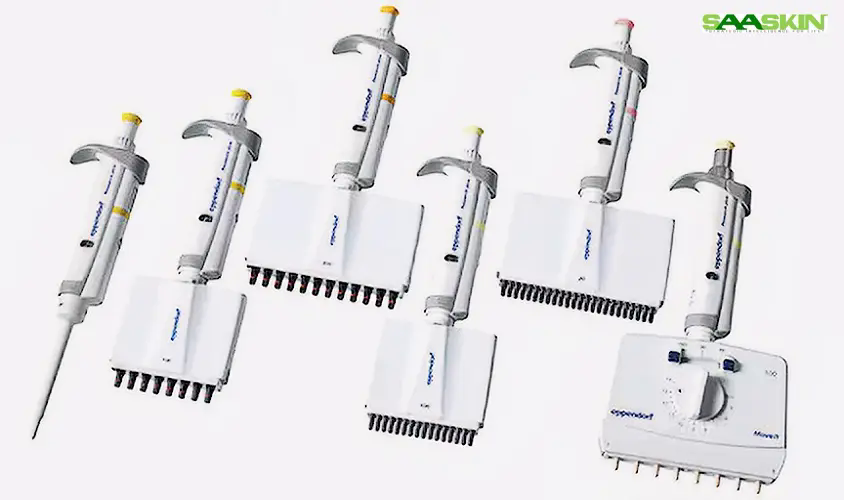
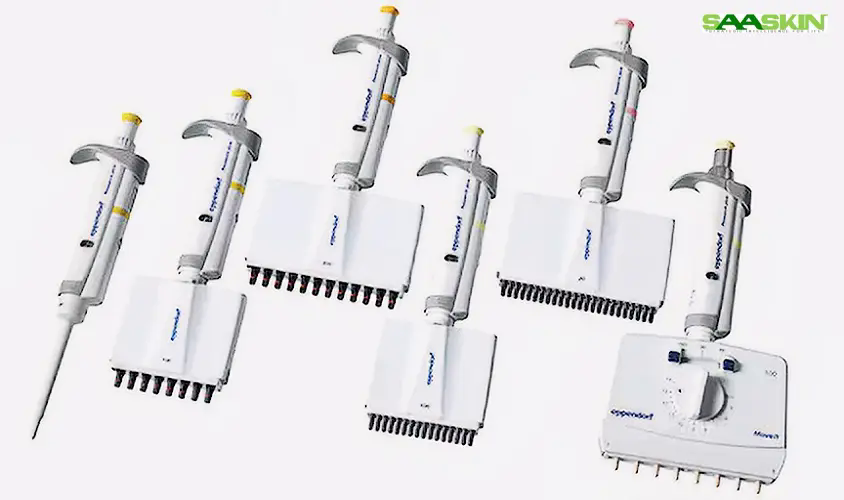
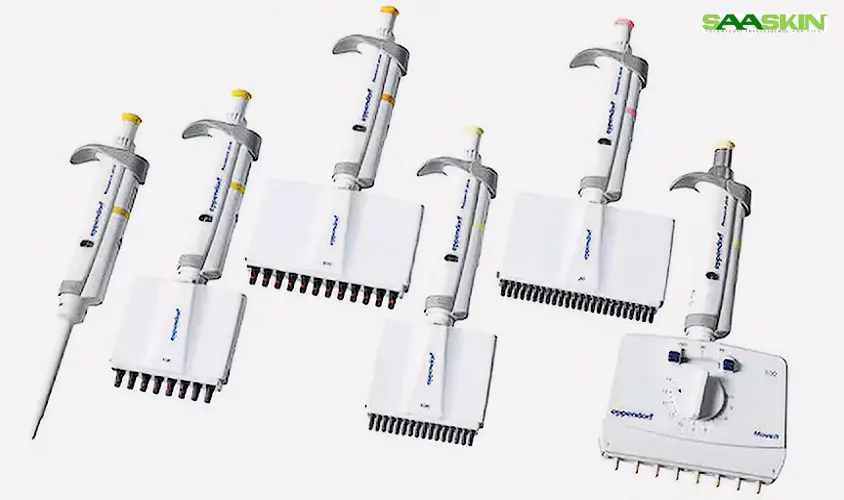
| Eppendorf ResearchA plus, multichannel |
CAT No. |
| 8-channel, variable, incl. epT.I.P.S.A Box 2.0 with 96 pipette tips, 0.5 a 10 I14L, medium gray |
3125000010 |
| 8-channel, variable, incl. epT.I.P.S.A Box 2.0 with 96 pipette tips, 10 a 100 I14L, yellow |
3125000036 |
| 8-channel, variable, incl. epT.I.P.S.A Box 2.0 with 96 pipette tips, 30 a 300 I14L, orange |
3125000052 |
| 8-channel, variable, 120-1200 I14L, green |
3125000214 |
| 12-channel, variable, incl. epT.I.P.S.A Box 2.0 with 96 pipette tips, 0.5 a 10 I14L, medium gray |
3125000028 |
| 12-channel, variable, incl. epT.I.P.S.A Box 2.0 with 96 pipette tips, 10 a 100 I14L, yellow |
3125000044 11 |
| 12-channel, variable, incl. epT.I.P.S.A Box 2.0 with 96 pipette tips, 30 a 300 I14L, orange |
3125000060 |
| 12-channel, variable, 120-1200 I14L, green |
3125000222 |
| 16-channel, variable, incl. epT.I.P.S.A Box 2.0 with 384 pipette tips, 1 a 20 I14L, light pink |
3125000079 |
| 16-channel, variable, incl. epT.I.P.S.A Box 2.0 with 384 pipette tips, 5 a 100 I14L, light yellow |
3125000095 |
| 24-channel, variable, incl. epT.I.P.S.A Box 2.0 with 384 pipette tips, 1 a 20 I14L, light pink |
3125000087 |
| 24-channel, variable, incl. epT.I.P.S.A Box 2.0 with 384 pipette tips, 5 a 100 I14L, light yellow |
3125000109 |
Reliable Performance in Demanding ConditionsEppendorf Safe-Lock Tubes are engineered to handle extreme laboratory procedures. Their robust construction allows them to withstand substantial centrifugal forces and a wide temperature spectrum, making them perfect for applications that require rigorous sample handling and processing-ranging from molecular biology to diagnostics.
Secure, Leakproof DesignThe innovative hinged Safe-Lock cap provides superior sealing, ensuring samples remain uncontaminated and preventing any risk of leakage. This secure closure is ideal for critical samples, offering peace of mind even during intense centrifugation, mixing, or storage procedures.
Versatile and Easy to UseDesigned for universal compatibility with all standard microcentrifuges, these tubes facilitate seamless integration into existing lab workflows. The clear, easy-to-read graduations and manual operation with an integrated snap cap make sample management straightforward for users at every skill level.
FAQ's of Eppendorf Safe-Lock Tubes a Microtube:
Q: How do Eppendorf Safe-Lock Tubes ensure sample integrity during centrifugation?
A: These tubes feature a leakproof Safe-Lock cap and are made from high-purity polypropylene, allowing them to withstand centrifugal forces up to 25,000 x g without compromising sample containment, even under stress.
Q: What types of laboratory applications are these tubes suitable for?
A: Eppendorf Safe-Lock Tubes are ideal for various sample storage, centrifugation, and molecular biology applications in research, biotechnology, and clinical diagnostic laboratories.
Q: When should I choose sterile versus non-sterile tubes?
A: Sterile tubes are recommended for sensitive molecular biology applications or clinical diagnostics where contamination must be avoided, while non-sterile tubes suit general laboratory work where sterility is not essential.
Q: Where can these tubes be used in terms of equipment compatibility?
A: These tubes fit all standard microcentrifuges, making them adaptable for a broad range of laboratory setups without the need for special adapters.
Q: What is the process for sterilizing these tubes if needed?
A: The tubes are autoclavable at 121C, which allows easy and effective sterilization in laboratory autoclaves for safe reuse.
Q: How do the graduation markings benefit daily laboratory work?
A: The clearly visible graduations at 0.5, 1.0, and 1.5 mL help users accurately measure and manage sample volumes, reducing errors during sample preparation or indexing.
Q: What makes these tubes particularly resistant to chemicals and temperature fluctuations?
A: Constructed from high-purity polypropylene, Eppendorf Safe-Lock Tubes demonstrate high resistance to a wide range of chemicals and can safely endure temperatures from -86C to 121C.











 Accepts only Export inquiries



 Send Inquiry