Product Description
Brand Thermo Fisher Scientific
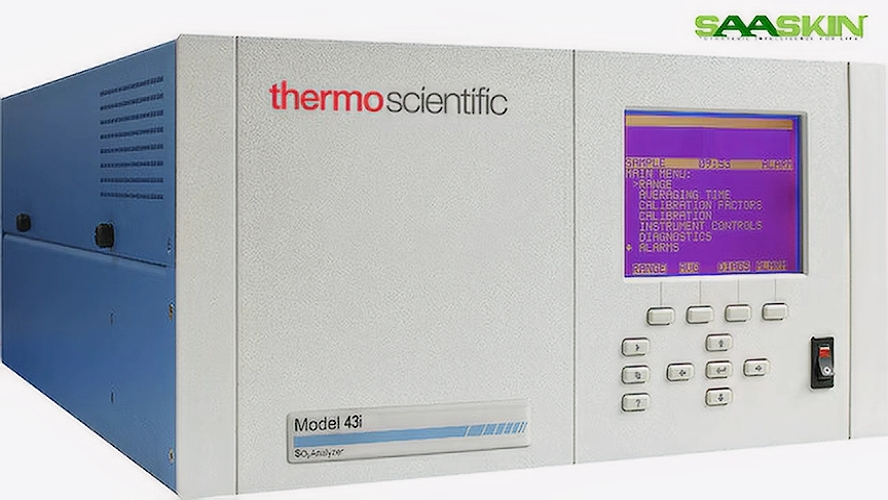
Model 42i
Capacity 0.6 L/min.
CAT No 42I
Application Electrochemistry
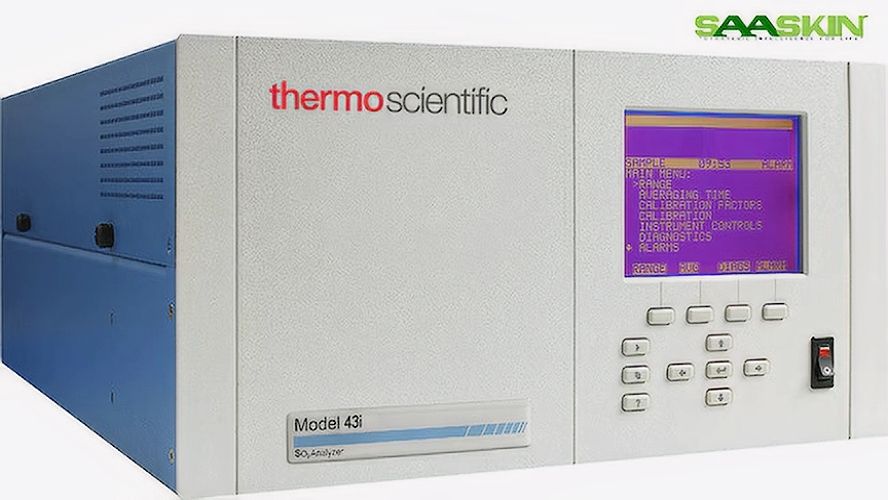
Measure levels of nitrogen oxide (NO-NO2-NOx) in the emissions from a source using chemiluminescent technology with the Thermo Scientific Model 42i NO-NO2-NOx Analyzer. The Model 42i NO-NO2-NOx Analyzer is also available with an oxygen sensor module. Using paramagnetic sensor technology the Model 42i with Oxygen gives the source measurement of NOx extended capabilities to read and report the concentration of oxygen in the sample stream up to 100%. Additionally, programming allows the user to correct the NO, NO2, NOx reading for the amount of oxygen in the sample.
How the Model 42i Delivers Reliable NOx MeasurementsUtilizing chemiluminescence detection, the Thermo Scientific Model 42i ensures the selective and accurate determination of NO, NO2, and NOx concentrations. With selectable ranges accommodating low and high concentrations (from 0-1 ppm up to 0-100 ppm), the analyzer is adept at providing real-time monitoring with a display resolution of 0.1 ppb. The instrument's advanced electronics and sample handling system work together to minimize noise and drift, guaranteeing results you can count on every day.
Process Efficiency and User-Friendly OperationDesigned for operational ease, the Model 42i supports both bench-top and rack-mount configurations to fit diverse laboratory or field installations. It allows for remote or local calibrations, ensures data integrity through extensive internal storage, and features a clear, backlit LCD digital display. Automatic diagnostics and an intuitive interface streamline daily use, allowing operators to focus on data rather than device management.
Comprehensive Connectivity and Data HandlingAddressing varied data management needs, the Model 42i offers versatile connectivity through analog outputs, RS232, Ethernet, and USB, enabling seamless integration into monitoring networks and data analysis platforms. With internal storage ensuring up to one year of data retention at 1-minute intervals, users benefit from substantial archival capacity and easy data retrieval for regulatory reporting or research analysis.
FAQ's of Thermo Scientific Model 42i (NO-NO2-NOx) Analyzer:
Q: How does the Thermo Scientific Model 42i measure NO, NO2, and NOx concentrations?
A: The Model 42i utilizes the chemiluminescence method, where nitric oxide reacts with ozone to produce light. The amount of light generated is proportional to the NO concentration, allowing for precise and selective measurement of NO, NO2 (after conversion to NO), and total NOx.
Q: What are the typical applications of the Model 42i analyzer?
A: This analyzer is primarily used for continuous, real-time monitoring of ambient air quality in industrial sites, environmental research stations, regulatory monitoring, and emissions testing facilities. Its range and accuracy make it suitable for a variety of air quality management scenarios.
Q: When should calibration be performed, and what options are available?
A: Calibration can be performed automatically on a set schedule or manually using local or remote access. Regular calibration ensures continued measurement accuracy, and the analyzer's automatic scheduling simplifies maintenance-especially during extended monitoring projects.
Q: Where can the Model 42i be installed and operated most effectively?
A: The Model 42i is designed for flexibility. It can be operated as a bench-top device or rack-mounted, making it suitable for laboratory environments, fixed monitoring stations, or even mobile labs within the specified temperature (5C to 40C) and humidity (up to 90% RH non-condensing) ranges.
Q: What is the process for retrieving stored data from the instrument?
A: Users can extract historical data using the instrument's analog, RS232, Ethernet, or USB outputs. The internal storage retains up to one year of data at one-minute intervals, providing ample history for post-analysis and compliance auditing.
Q: How does the Model 42i benefit air quality monitoring programs?
A: With fast response, high accuracy (0.5% of reading or 0.5 ppb), robust data handling, and automatic diagnostics, the analyzer improves data reliability and operational efficiency. Its versatility in connectivity and easy maintenance support consistent, long-term monitoring without frequent intervention.











 Accepts only Export inquiries



 Send Inquiry