Product Description
| Brand | Thermo Fisher Scientific |
| Model | i160 Dual |
| Capacity | 165 L |
| CAT No | 50163013 |
| Application | CO2 Incubator |
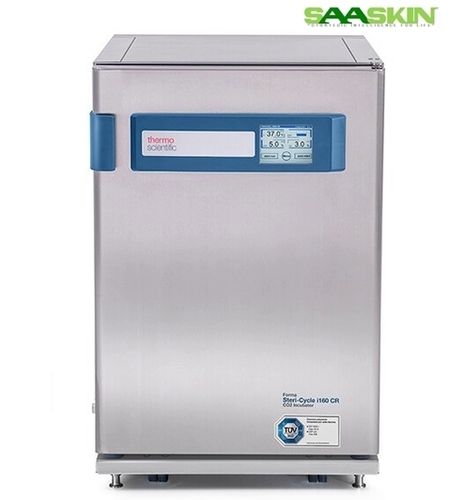
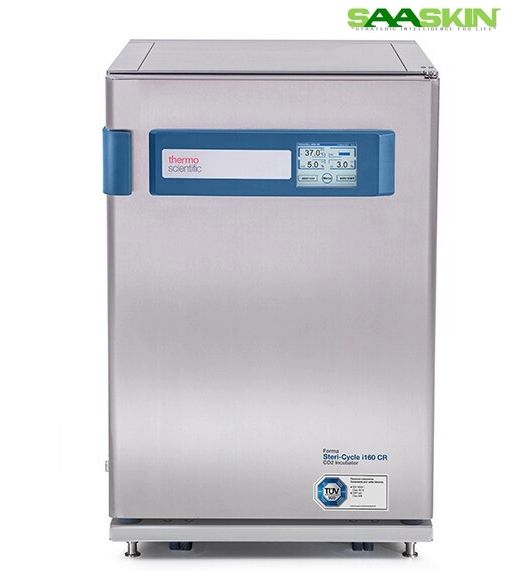
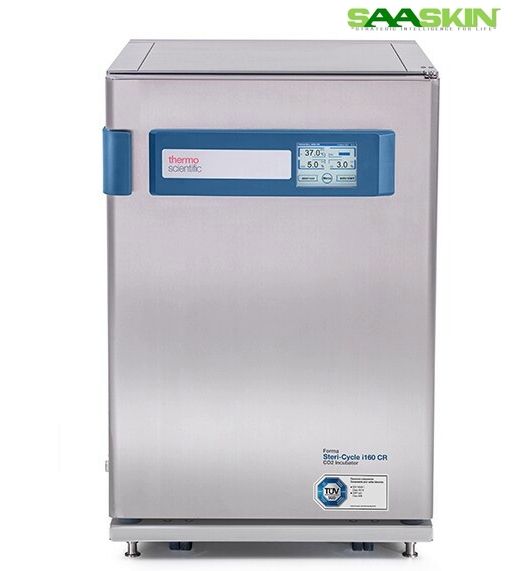
Achieve your next breakthrough. The Thermo Scientific Forma Steri-Cycle i160 CO2 Incubator is specifically designed to deliver the performance reliability, ease of operation, and value required to support a range of culturing needs from basic research to the demanding, leading-edge applications, so you're ready for whatever comes next. Better solutions for optimal cell growth. Our CO2 incubators with non-corrosive stainless-steel or copper interior chambers provide the ideal in-vitro environment.
Touchscreen Precision and ControlThe Forma Steri-Cycle i160 features an iCAN touchscreen microprocessor, offering user-friendly navigation and precise digital control. The full-color display ensures clear visualization of real-time parameters, easy programming, and quick access to stored data for up to a year via USB or onboard storage.
Uncompromised Sterility with High-Temperature DecontaminationWith an automatic 140C overnight sterilization cycle, this incubator ensures a contamination-free environment. The high-efficiency decontamination process kills bacteria, fungi, and spores without chemicals, supporting sensitive cell cultures and research consistency.
Superior Environmental Stability and SecurityDesigned with infrared (IR) sensor technology, humidity control, and quick CO2 recovery (<5 minutes), the i160 maintains optimal conditions after minor disturbances. Audible and visual alarms monitor temperature, CO2, door status, and humidity for maximum sample security.
FAQ's of Thermo Fisher Scientific Forma Steri-Cycle i160 Dual CO2 Incubator:
Q: How does the iCAN touchscreen microprocessor control improve operation of the Forma Steri-Cycle i160 CO2 Incubator?
A: The iCAN touchscreen microprocessor provides intuitive, simplified control over all incubation parameters. It allows for precise digital adjustments, real-time monitoring, and data logging, streamlining the lab workflow and minimizing user errors during operation.
Q: What is the process for decontaminating the CO2 incubator and how often should it be performed?
A: The incubator offers a high-temperature decontamination cycle at 140C, which can be run overnight. This process effectively eliminates microbial contamination. The frequency depends on lab protocols, but it's commonly performed between experiments or when contamination is suspected.
Q: When should I use the split inner glass doors?
A: The split inner glass doors are designed to allow access to specific shelves or sections, minimizing air disturbance and temperature loss. They are particularly useful when you need to retrieve or store samples frequently without affecting the entire chamber environment.
Q: Where can I install the Forma Steri-Cycle i160, and is it suitable for stacking?
A: This incubator is designed to fit into most laboratory settings due to its compact footprint (650 x 830 x 905 mm) and sturdy stainless steel build. It is also stackable, allowing up to two units to be securely installed on top of each other to save benchtop or floor space.
Q: What are the primary benefits of the infrared (IR) sensor-based CO2 control system?
A: The IR sensor provides rapid and stable CO2 detection that's less affected by temperature and humidity fluctuations. This ensures optimal gas composition and quick recovery (<5 min) after door openings, protecting cultures from environmental disturbances.
Q: How is data stored and accessed from the incubator for compliance or monitoring purposes?
A: The unit features onboard data storage for up to one year and a USB port for exporting data. This facilitates compliance with laboratory documentation standards and allows easy transfer and review of historical environmental records for audits or troubleshooting.
Q: In what types of laboratories is the Forma Steri-Cycle i160 most advantageous to use?
A: This incubator is ideal for biotechnology, clinical, medical, and research laboratories requiring precise and safe incubation of cell and tissue cultures. It is particularly beneficial in environments demanding sterility, constant monitoring, and documentation.











 Accepts only Export inquiries




 Send Inquiry