Product Description
Brand Shimadzu
Model 7200
Capacity W300 x D275 x approx. H100 mm.
CAT No EDX-7200
Application Spectroscopy
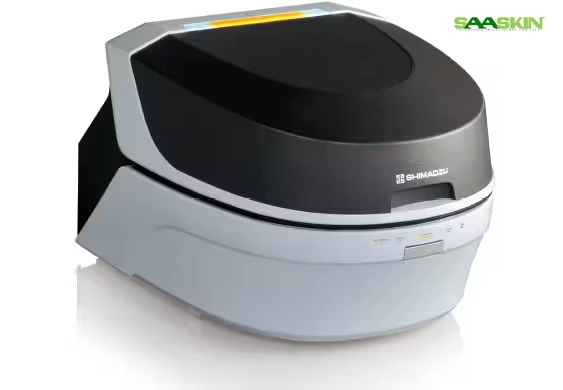
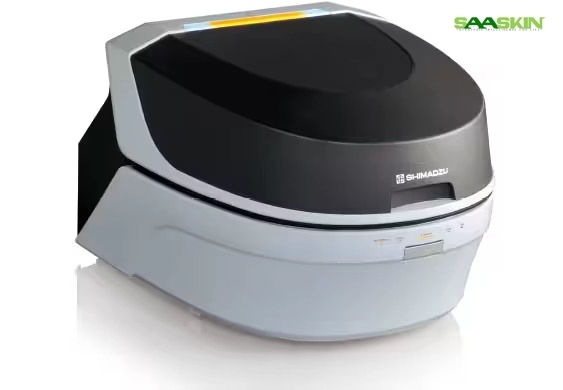
The EDX-7200 is a flagship model of the EDX series in pursuit of high sensitivity, high speed and high precision. This model supports new regulations and directives for consumer and environmental compliance, such as RoHS/ELV, REACH, and TSCA with full exclusive screening analysis kits.
Advanced Elemental Analysis TechnologyThe EDX-7200 employs cutting-edge energy dispersive X-ray fluorescence (EDXRF) technology, allowing users to perform both qualitative and quantitative analysis across a wide elemental range (Na to U). Its silicon drift detector enhances sensitivity and supports ultra-fast, accurate measurements, making it suitable for demanding analytical applications in academic, industrial, and research settings. The system accommodates various sample types, from solids to powders and liquids, and features customizable sample holders for flexible analysis.
Efficient Operation and User-Friendly SoftwareShimadzu's intuitive Windows-based software streamlines data processing and analysis, enabling quick screening (typically 60 seconds) and detailed evaluations with minimal operator training. Optional automatic sample changers increase productivity, while the LCD panel keeps users informed of operational status. Standardless analysis and fundamental parameter calibration methods simplify workflows, further reducing analysis time.
Enhanced Safety and ReliabilityThe EDX-7200 is designed with user safety and durability in mind. It boasts an integrated interlock system to prevent radiation exposure during operation. The sample chamber is lined with lead for added radiation protection, and core components are constructed from robust steel and chemical-resistant plastics to ensure longevity and safe operation under rigorous lab conditions.
FAQ's of Shimadzu EDX-7200 Energy Dispersive X-ray Fluorescence Spectrometer:
Q: How does the Shimadzu EDX-7200 achieve high sensitivity in elemental analysis?
A: The EDX-7200 utilizes a silicon drift detector (SDD) with a large effective area, a rhodium-target X-ray tube, and advanced energy dispersive technology. Vacuum and optional helium purge systems further enhance detection of light elements, while state-of-the-art software enables rapid, sensitive screening from trace (low ppm) to major concentrations.
Q: What types of samples can be analyzed with the EDX-7200?
A: This spectrometer accommodates solids, powders, liquids, and thin films. Standard sample sizes run up to 32 mm diameter and 10 mm thickness, with specialized holders available for micro samples. Its adjustable chamber height (up to 42 mm) and flexible atmosphere control allow for versatile sample analysis.
Q: When is the optional helium purge recommended for the EDX-7200?
A: The helium purge option is useful when analyzing light elements (such as sodium, magnesium, or aluminum) or samples sensitive to oxidation or contamination. Helium improves light element sensitivity compared to vacuum and is preferred for specific analytical challenges or where air-sensitive materials are involved.
Q: Where can the EDX-7200 be installed, and what are the environmental requirements?
A: The EDX-7200 is suitable for laboratory environments and requires ambient operating conditions (recommended 15-30C). Its air-cooled system and compact design facilitate installation on sturdy benches. Standard AC voltage from 100-240 V is supported, making it adaptable to various global settings.
Q: What is the process for calibrating the EDX-7200 before analysis?
A: Calibration can be performed using the fundamental parameter method or through standardless analysis, both integrated into the Windows-based software. This reduces the need for frequent manual calibration and simplifies the setup for a wide range of elemental analyses.
Q: How does the EDX-7200 benefit users compared to conventional analytical techniques?
A: The EDX-7200 offers ultra-fast analysis (often within a minute), non-destructive testing, low maintenance, and easy operation through automated features and intuitive software. Its advanced safety systems and flexible sample handling provide additional advantages for routine and research laboratories alike.










 Accepts only Export inquiries



 Send Inquiry