Product Description
Brand Waters Corp
Product Type Filtration
Pack Size 100 Nos
CAT No WAT200556
Application Sample Preparation
Hydrophobic, polytetrafluoroethene (PTFE) membranes are recommended for use with non-aqueous solvents. Organic-based, highly acidic or basic samples and solvents
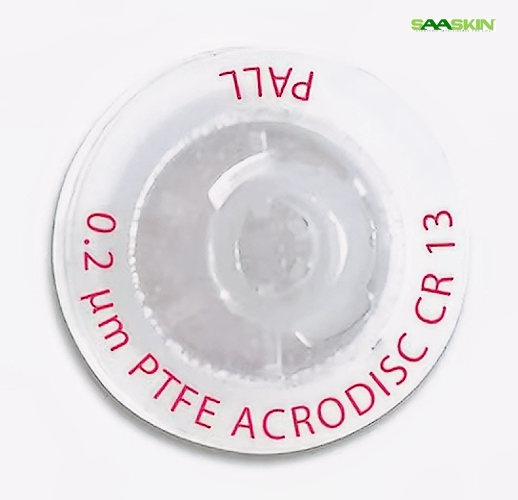
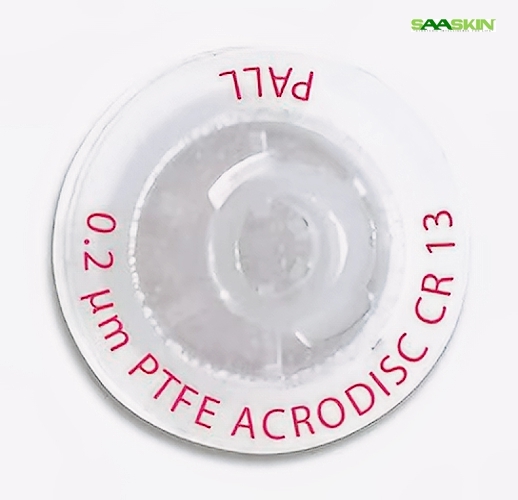
Reliable Filtration for Critical Laboratory ApplicationsThe PTFE CE Acrodisc Minispike Syringe Filter is engineered for precise analytical and chemical filtration tasks, excelling in HPLC sample preparation and dissolution testing. Its 0.2 m pore size ensures high filtration accuracy, while the chemically resistant PTFE membrane stands up to even the most aggressive solvents and acids. This filter delivers dependable performance for consistent laboratory outcomes.
Easy Integration and User-Friendly DesignFeaturing a Minispike inlet for effortless connection to standard syringes, this syringe filter saves time and reduces sample loss during prep. Its compact 13 mm diameter, combined with lightweight yet robust polypropylene housing, allows seamless use in manual laboratory workflows. Product packs contain 100 filters, suitable for recurring filtration needs in busy labs.
Safety, Compliance, and VersatilityCE marking underlines the product's adherence to rigorous safety and quality standards. The non-sterile design makes it ideal for routine filtration tasks where sterility is not essential. With a maximum operating pressure typical for similar filters (up to 75 psi) and low extractable levels, the PTFE CE Acrodisc Minispike Syringe Filter supports a wide range of applications, from chemical filtration to analytical testing.
FAQ's of Waters Corp PTFE CE Acrodisc Minispike Syringe Filter, 13 mm, 0.2 Am, 100/pk:
Q: How is the Waters Corp PTFE CE Acrodisc Minispike Syringe Filter typically used in the laboratory?
A: This syringe filter is primarily used for HPLC sample preparation, analytical filtration, and dissolution testing. Its PTFE membrane makes it suitable for filtering aggressive solvents, acids, and other chemicals, providing consistent, accurate results for various laboratory workflows.
Q: What types of chemicals are compatible with the PTFE membrane of this filter?
A: The PTFE membrane offers excellent resistance against most aggressive solvents, acids, and chemicals commonly used in laboratory environments. This chemical compatibility makes it ideal for applications requiring the filtration of highly reactive or corrosive samples.
Q: When should this non-sterile syringe filter be selected over sterile alternatives?
A: Choose the non-sterile version when the application does not require sterile conditions, such as during routine HPLC sample preparation or analytical filtration where product sterility is not essential. This can help streamline workflows and reduce costs in large-scale testing scenarios.
Q: Where can the Waters Corp PTFE CE Acrodisc Minispike Syringe Filter be sourced in India?
A: This product is available through dealers, distributors, wholesalers, exporters, manufacturers, suppliers, and traders across India. Check with authorized laboratory equipment suppliers to ensure authentic and timely procurement.
Q: What benefits does the Minispike inlet provide during filtration?
A: The Minispike inlet allows for a secure, leak-free connection to standard syringes, reducing sample loss and ensuring efficient, straightforward sample transfer. This feature supports manual, hands-on filtration processes in busy laboratory settings.
Q: How does the filter ensure accurate and clean sample preparation?
A: With its precise 0.2 m pore size and low extractable design, the filter minimizes contamination and particle retention. The CE marking further guarantees quality control and consistency, supporting reliable analysis in critical applications.
Q: What is the maximum operating pressure and why is it important?
A: The filter can handle pressures up to approximately 75 psi, which is typical for similar syringe filters. This high pressure tolerance allows for efficient filtration even with viscous or particulate-rich samples, extending its utility for a variety of lab protocols.












 Accepts only Export inquiries



 Send Inquiry