Product Description
| Brand |
Snibe |
| Sample Type |
Serum |
| Pack Size |
100T |
| CAT No. |
130263001M |
| Application |
Anemia Marker |
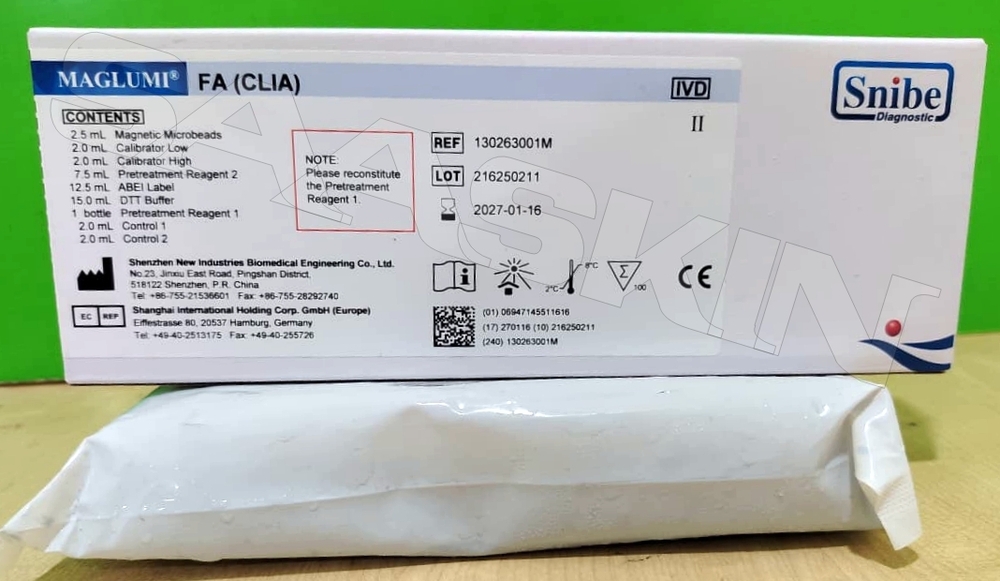
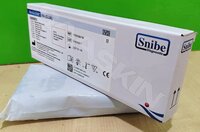
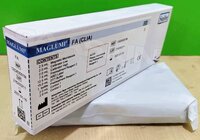
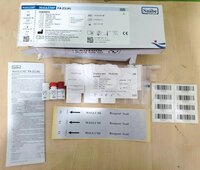
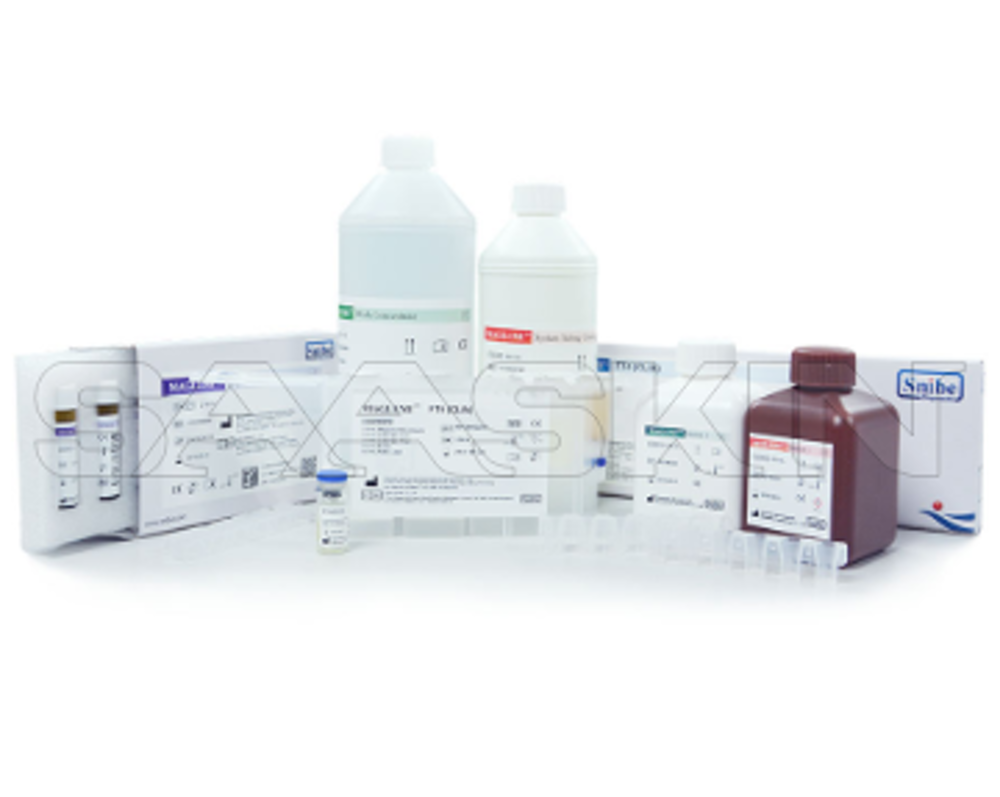
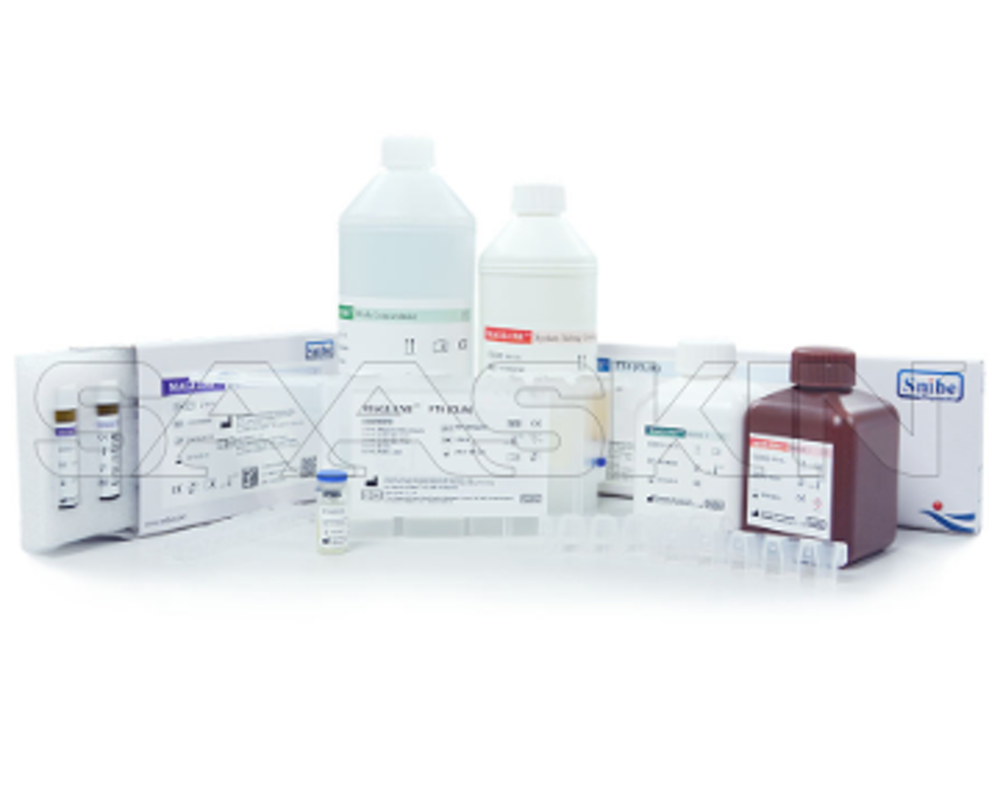
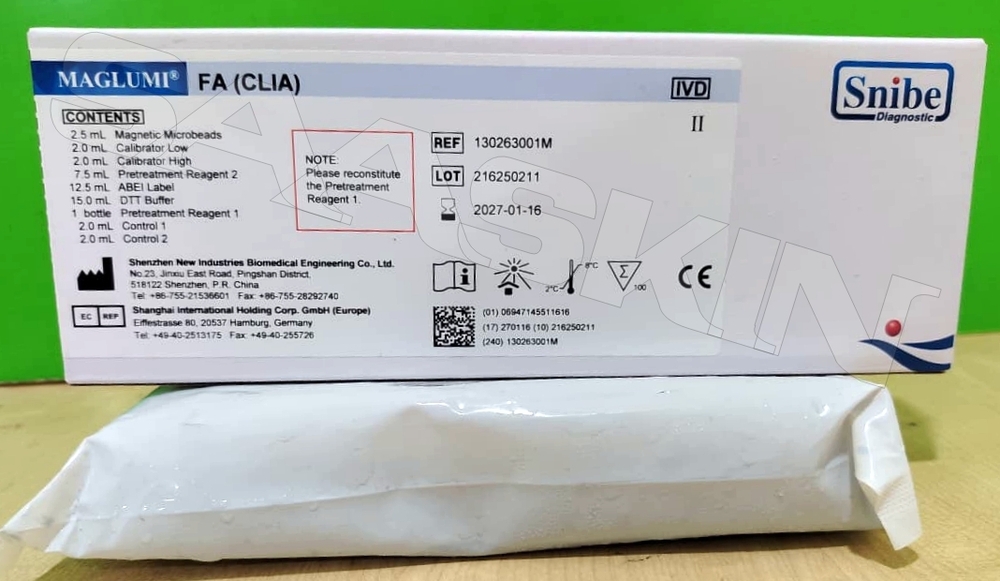
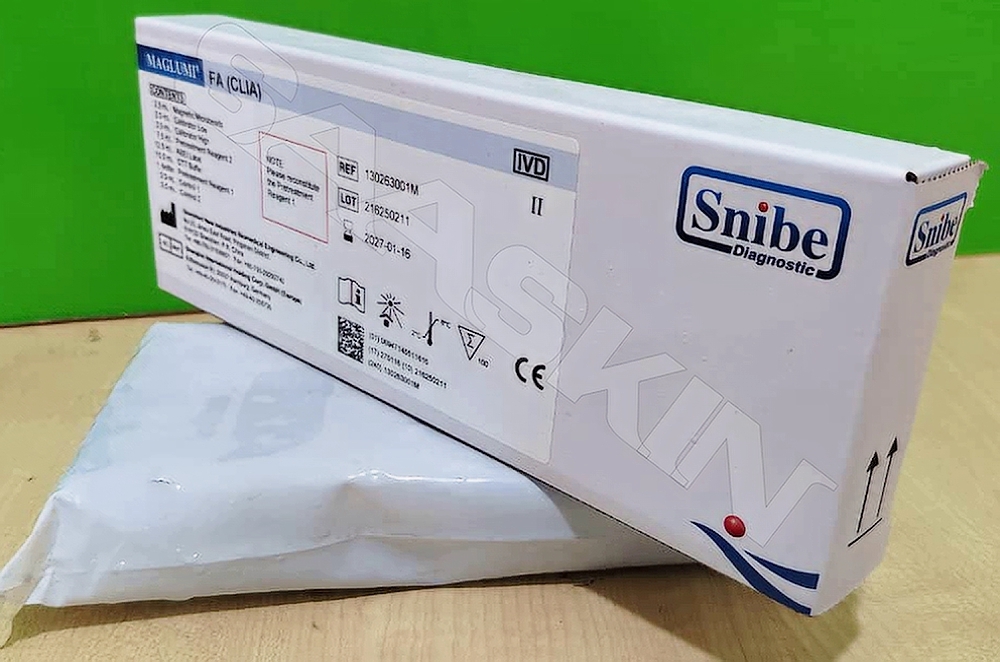
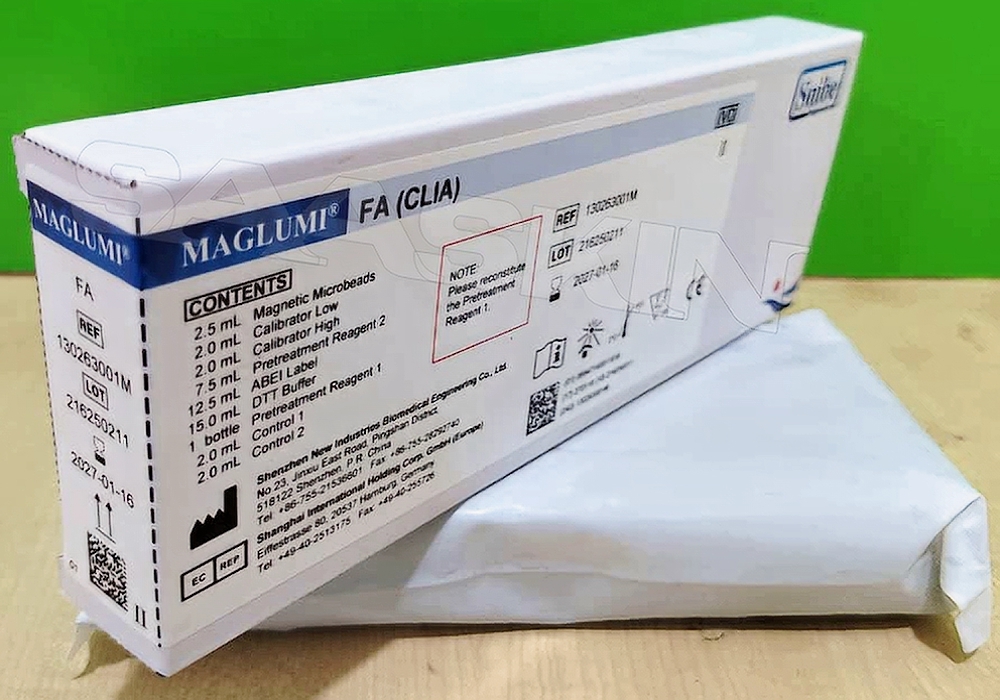
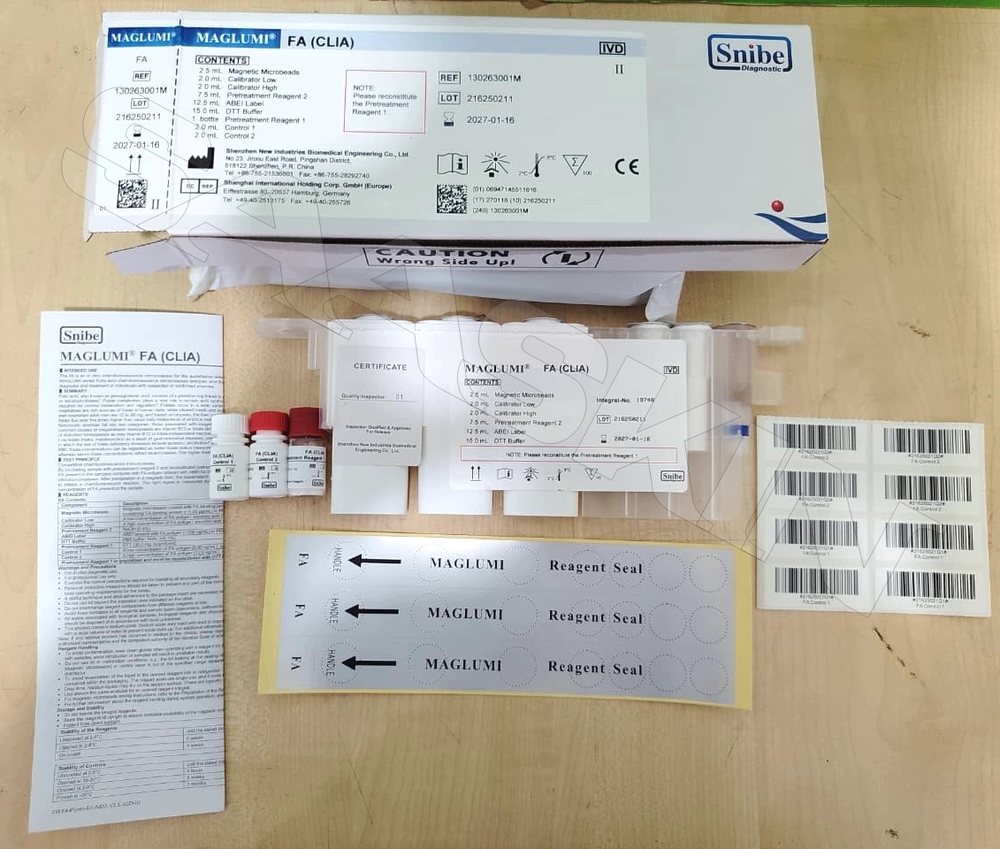
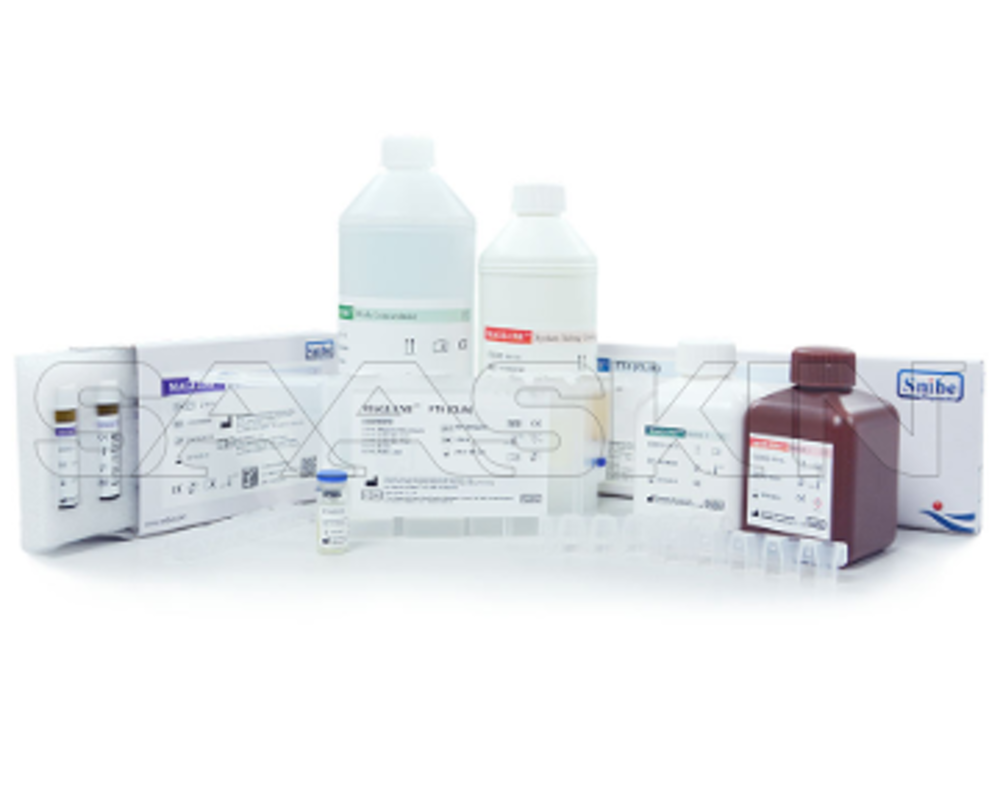
The kit has been designed for the quantitative determination of Folic Acid (FA) in human serum. The method can be used for samples over the range of 0.375-24 ng/ml. The test has to be performed on the Fully-auto chemiluminescence immunoassay (CLIA) analyzer MAGLUMI (Including Maglumi 600,Maglumi 1000,Maglumi 1000 Plus, Maglumi 2000,Maglumi 2000 Plus,Maglumi 3000 and Maglumi 4000).
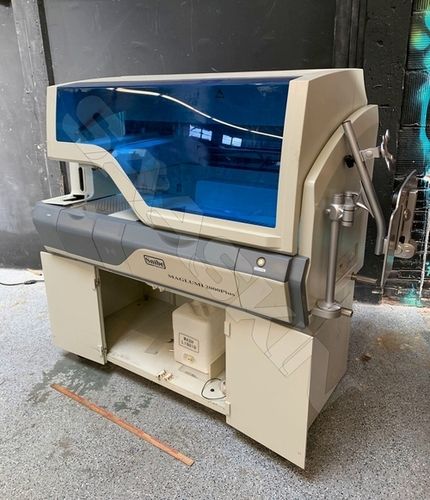
Comprehensive Immunoassay Testing for LaboratoriesThe Snibe MAGLUMI FA (CLIA) provides outstanding performance in immunoassay diagnostics, enabling fast, accurate, and quantitative or qualitative detection of a wide array of analytes. Its efficient workflow, automation, and high throughput make it an invaluable instrument for clinical laboratories requiring reliable, scalable testing solutions.
Fully Automated Operation with High ThroughputEngineered for efficiency, the MAGLUMI FA can process up to 180 tests per hour, accommodating 30 samples and 15 reagents simultaneously. Its robust automation features-including an automatic probe washing system and independent incubation-ensure repeatable and precise results with minimal operator intervention.
User-Friendly Design and Advanced ConnectivityOperators benefit from a multilingual, touchscreen LCD interface, internal printing capability, and remote software updates. The integrated barcode reader and USB/LAN connectivity streamline data management and allow for effortless integration into laboratory information systems, enhancing workflow and ease of use.
FAQ's of Snibe MAGLUMI FA (CLIA):
Q: How does the MAGLUMI FA (CLIA) ensure accuracy and reliability in test results?
A: The analyzer uses a highly controlled chemiluminescence immunoassay (CLIA) technology with precise temperature control at 37C, automatic probe washing, and both automatic and manual calibration options. It boasts a high accuracy (CV 2.0%), supporting consistent and dependable results for each run.
Q: What types of assays can be performed on this analyzer?
A: The MAGLUMI FA (CLIA) supports a wide menu of assays, including hormones, tumor markers, infectious disease markers, and additional routine immunoassays, making it suitable for a broad range of diagnostic applications.
Q: When should the instrument's calibration and maintenance routines be carried out?
A: Calibration can be performed either automatically or manually, as required by assay or institutional protocols. Routine maintenance is simplified by the automatic probe washing system and intuitive interface, and should follow the manufacturer's recommended schedule for sustained optimal operation.
Q: Where can this analyzer be installed and used?
A: Designed for use in clinical laboratory settings, the instrument should be installed in a dry, dust-free environment with a consistent power supply (AC 220V, 50/60Hz) to ensure stable, safe operation. Its weight and lack of portability make it suitable for bench-top placement rather than mobile use.
Q: What is the process for running a test on this analyzer?
A: To conduct a test, load samples (10-150 L) and reagents into the respective slots, select the assay via the touchscreen LCD, and initiate the automated process. The system handles incubation, detection, and result reporting, while the operator monitors workflow and receives data via the display or internal printer.
Q: How does the system support workflow integration and data management?
A: The analyzer is equipped with USB and LAN connectivity as well as an internal printer and integrated barcode reader, allowing seamless integration with laboratory information systems for straightforward data transfer and efficient sample tracking.
Q: What are the main benefits of using the Snibe MAGLUMI FA (CLIA) in a clinical laboratory?
A: Key benefits include high throughput (up to 180 tests/hour), reliable automation, high accuracy, broad assay coverage, and easy operation. These features help streamline immunoassay testing, reduce turnaround time, and improve laboratory productivity, accuracy, and efficiency.












 Accepts only Export inquiries



 Send Inquiry