Product Description
| Brand | Beckman Coulter |
| Sample Type | Serum/ Plasma |
| Pack Size | 2 x 50T |
| CAT No. | 33880 |
Application
| Thyroid Marker |
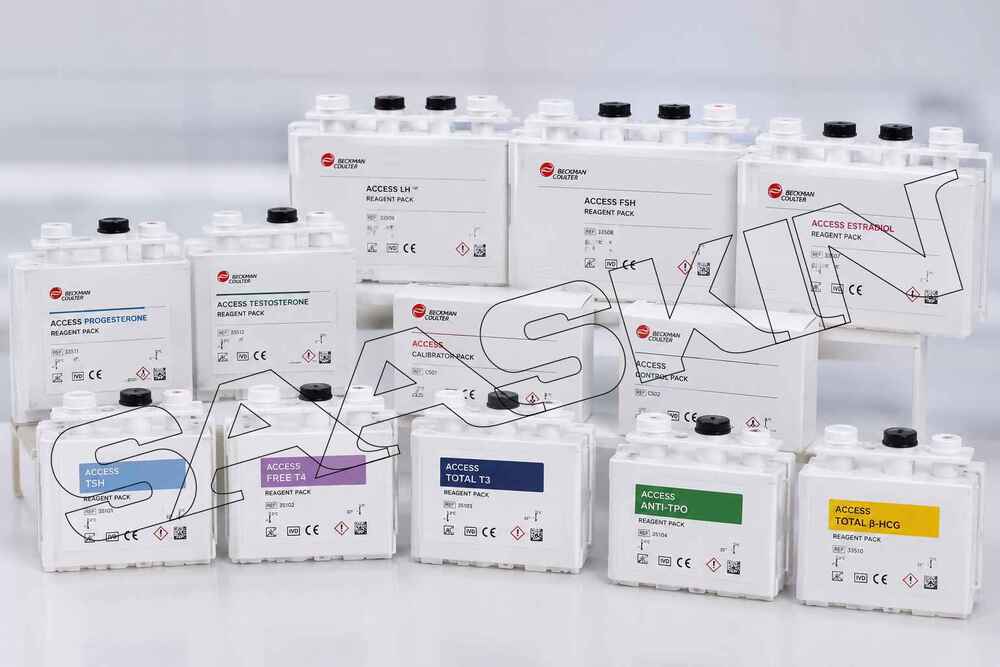
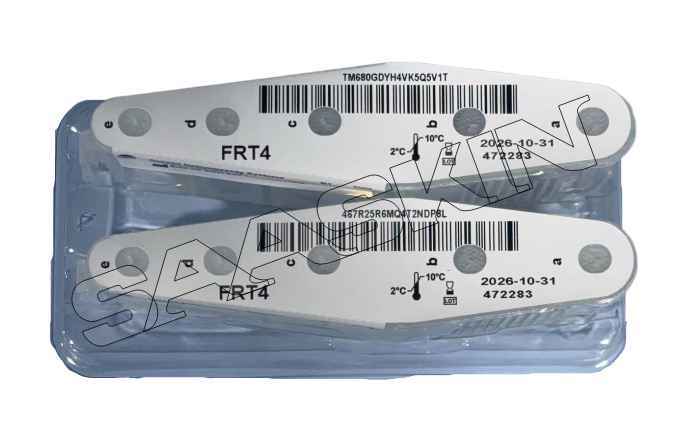
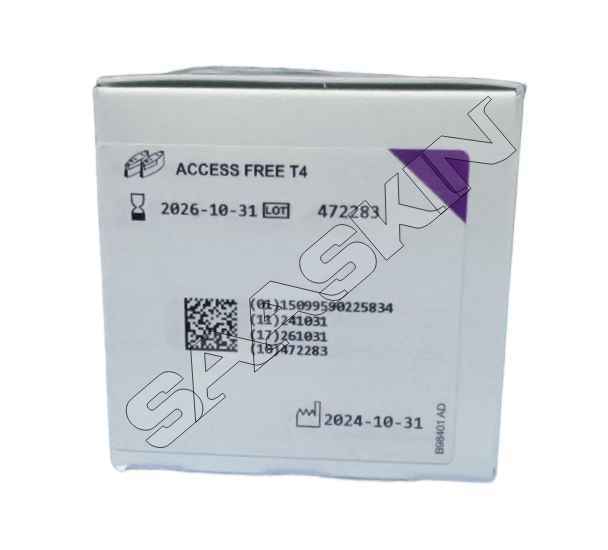
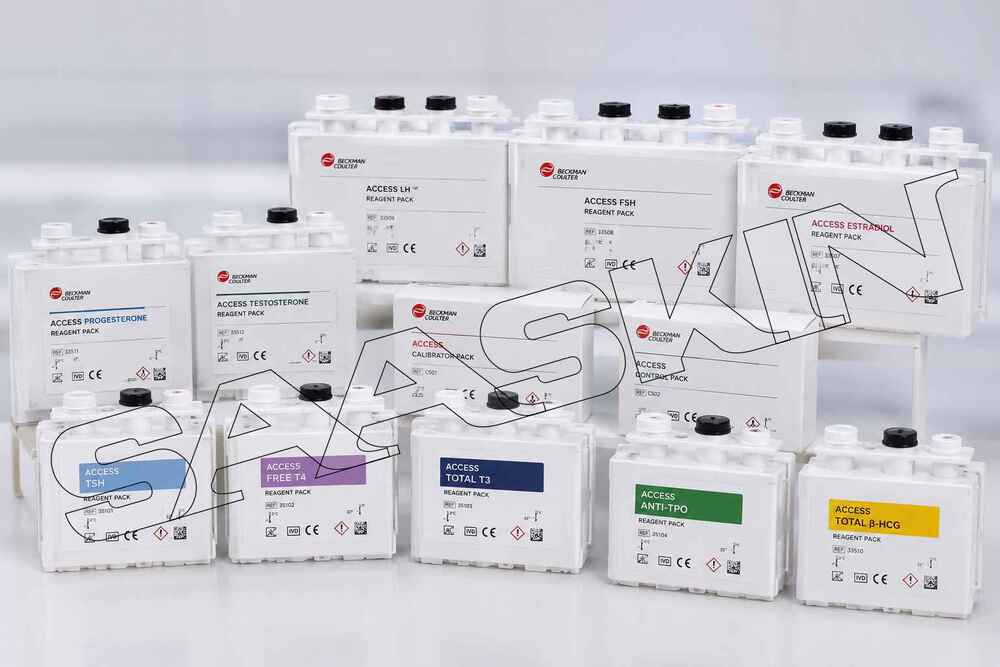
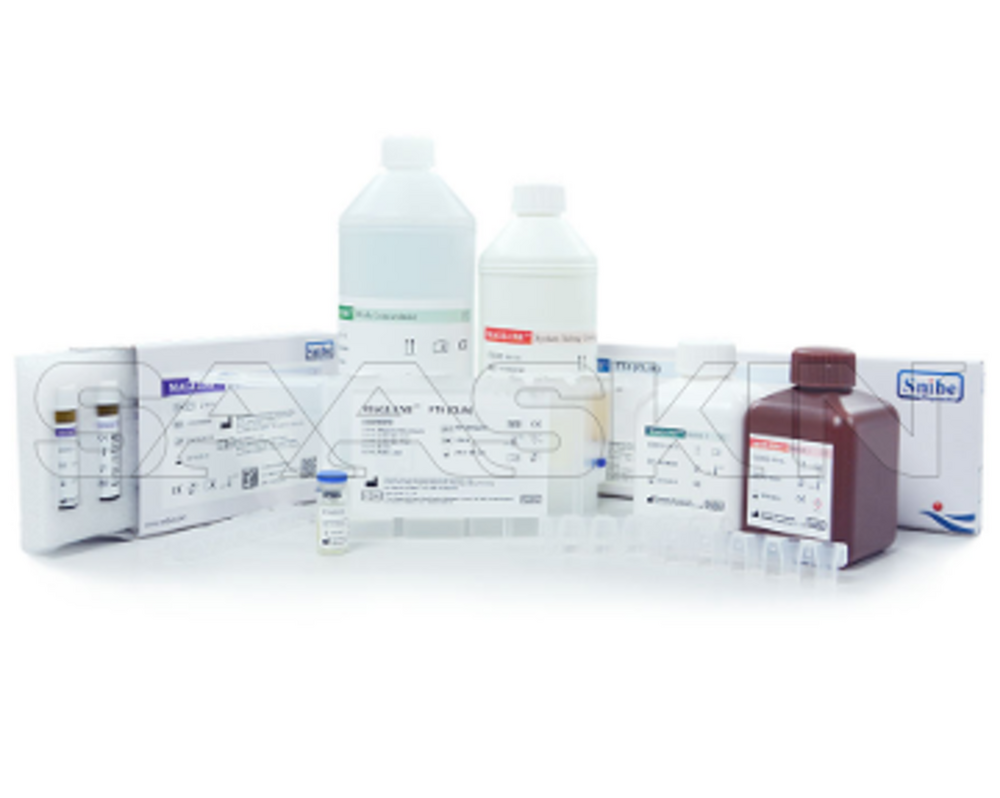
Beckman Coulter Access Free T4 (CLIA) is a high-performance Chemiluminescent Immunoassay (CLIA) reagent designed for the quantitative determination of Free Thyroxine (Free T4) in human serum and plasma. The Beckman Coulter Access Free T4 Reagent is widely used for the diagnosis and monitoring of hyperthyroidism, hypothyroidism, Graves' disease, Hashimoto's thyroiditis, and other thyroid-related disorders.
Advanced Chemiluminescence TechnologyHarnessing the power of CLIA, the analyzer ensures high sensitivity and specificity in Free T4 detection. This advanced method is ideal for accurate and swift hormone assessments in clinical laboratories, contributing to more precise patient evaluation and management.
Portable and User-Friendly DesignWith automatic operation and a portable build, the analyzer seamlessly fits into various laboratory settings. Its intuitive interface simplifies usage for technicians and ensures effective real-time monitoring during Free Thyroxine analysis.
Reliable Results for Clinical DecisionsConsistent calibration and automated functions enable swift, reproducible outputs necessary for timely medical decisions. Storage requirements between 2 to 10C ensure stability and reliability, making it a practical choice for busy labs in India.
FAQ's of BC Access Free T4 (CLIA):
Q: How does the BC Access Free T4 (CLIA) Analyzer determine Free Thyroxine levels?
A: The device employs Chemiluminescence Immunoassay (CLIA) technology to accurately quantify Free T4 in clinical samples, providing sensitive and specific hormone analysis.
Q: What are the main benefits of using this portable CLIA analyzer in the laboratory?
A: Its portability, automatic real-time operation, and advanced CLIA technology ensure precise results, streamlined workflow, and adaptability across diverse laboratory setups.
Q: Where should the analyzer be stored to maintain optimal performance?
A: It should be stored in a temperature-controlled environment between 2 to 10 degrees Celsius to maintain device reliability and sample integrity.
Q: When is this analyzer most often used in a clinical setting?
A: It is commonly utilized during thyroid function testing, specifically when accurate measurement of Free T4 is crucial for diagnosing and managing thyroid-related conditions.
Q: What is the process of operating the BC Access Free T4 (CLIA) Analyzer?
A: Simply prepare the clinical sample, load it into the analyzer, and initiate the automatic process. The analyzer conducts the test and delivers results in real time with minimal manual intervention.
Q: Who can benefit from integrating this device into their workflow?
A: Dealers, distributors, exporters, manufacturers, suppliers, traders, and wholesalers in India who supply diagnostic laboratory equipment will find this analyzer particularly advantageous for their clientele.












 Accepts only Export inquiries



 Send Inquiry